
Nick Ashton explains how four years of forensic investigations at Barnham in Suffolk demonstrate the world’s oldest evidence of making fire at 400,000 years ago.
Discovery
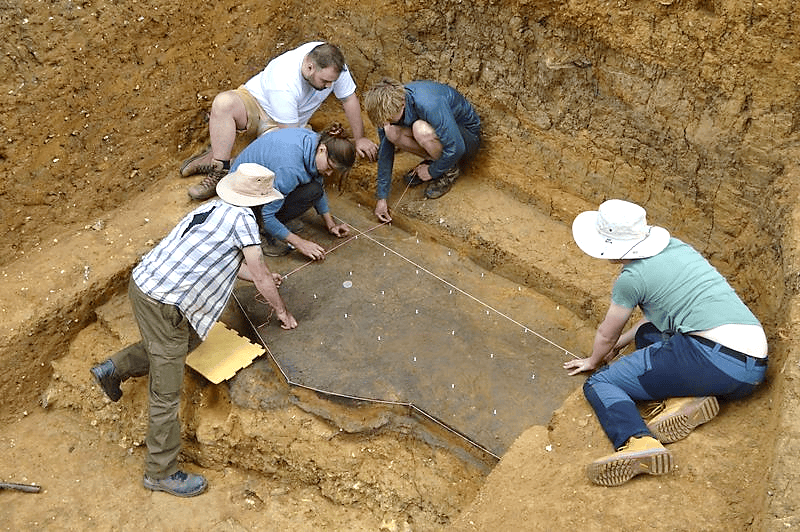
The first inkling that I had of something unusual was a small patch of reddened clay, almost terracotta in colour. It was a sunny afternoon in June 2021, and the seasonal excavation was midway through the three weeks, running like clockwork in the overgrown former claypit. I was surplus to requirements, so decided to investigate a quiet, shaded part of the site. The min-digger had provided a tantalising glimpse of a dark ancient soil in 2019, but with Covid in 2020, we hadn’t had time to investigate further. With half a thought for a quiet nap in the cool of the large oak, I instead picked up my spade and trowel, clearing the area of two seasons of leaf-litter and re-found the patch of dark organic-rich clay – the soil of an ancient landsurface.
Previous excavations of this 5 cm thick dark clay had revealed very little archaeology, but it marked much richer pond-edge sediments that lay underneath, containing flint flakes and tools, left by early Neanderthals over 400,000 years ago. A lone handaxe had been found on the landsurface in 1991, but some 15 m to the west.
Trowelling down to the surface of the clay, revealed an area a metre across and on the front edge, the cut made by clay-pit workers over a century earlier. It was in cleaning down this steep edge that the reddened clay was first revealed, with dark clay above and below. My immediate thought was that the reddening indicated heating. I waited until the end of the afternoon when colleagues wandered over to take a look – a few raised eyebrows, gentle nods and the understated comment ‘intriguing’. We all shared that wonderful feeling of being on the threshold of an important discovery.
Excavation and proof
Having a hunch of early fire-use is not good enough, so it took four years to convincingly demonstrate that the heating was caused by humans, not part of a natural fire. Unfortunately, archaeology involves destruction, so trying to understand the extent of the reddened clay involved a lot of head-scratching to ensure we understood the form of the structure, as well as leaving enough in place for future researchers. We were fortunate, as one of our team was Claire Lucas, a brilliant excavator with much experience on similar sites in France. Tentative steps led to excavating diagonally opposed corners giving us a clear idea of the size – about 50 cm across – and enough sediment for analysis. In fact, quarrying in the 1900s had probably removed over half the structure.
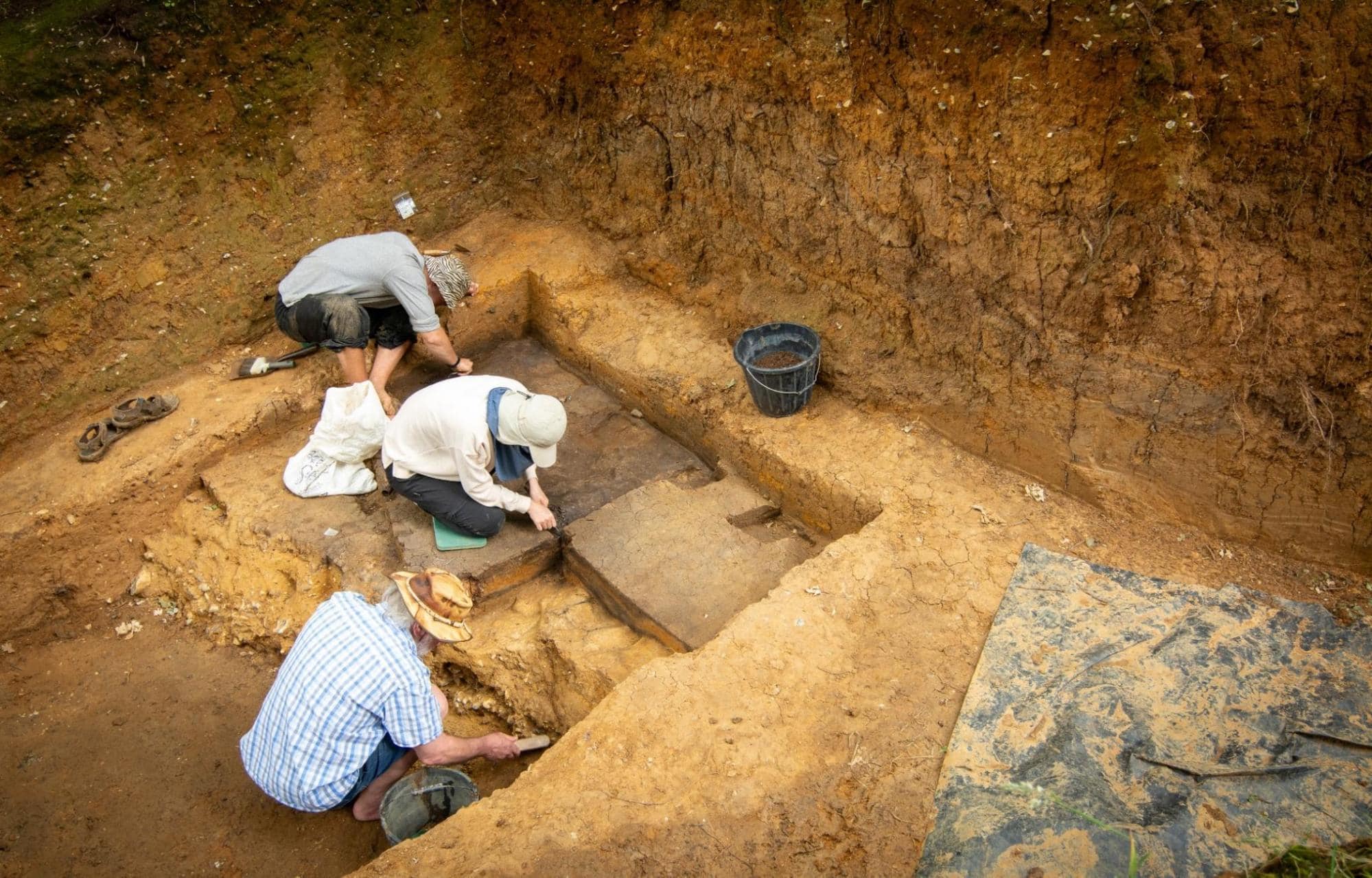
So how could we distinguish between natural and human burning? First, we had to demonstrate that the reddened clay had been heated and, if so, was it in situ? Fortunately, we now have a raft of geochemical tests and specialists in France, Germany, Austria and Britain who could help. Changes in the mineral structure of the clay showed heating to over 700 °C, while microscopic examination indicated that the sediment was in place, and not moved. Furthermore, tests suggested not just one burning event but repeated burning in the same place. The conclusion was clear – we had a campfire, or hearth, that had been used by people on several occasions.
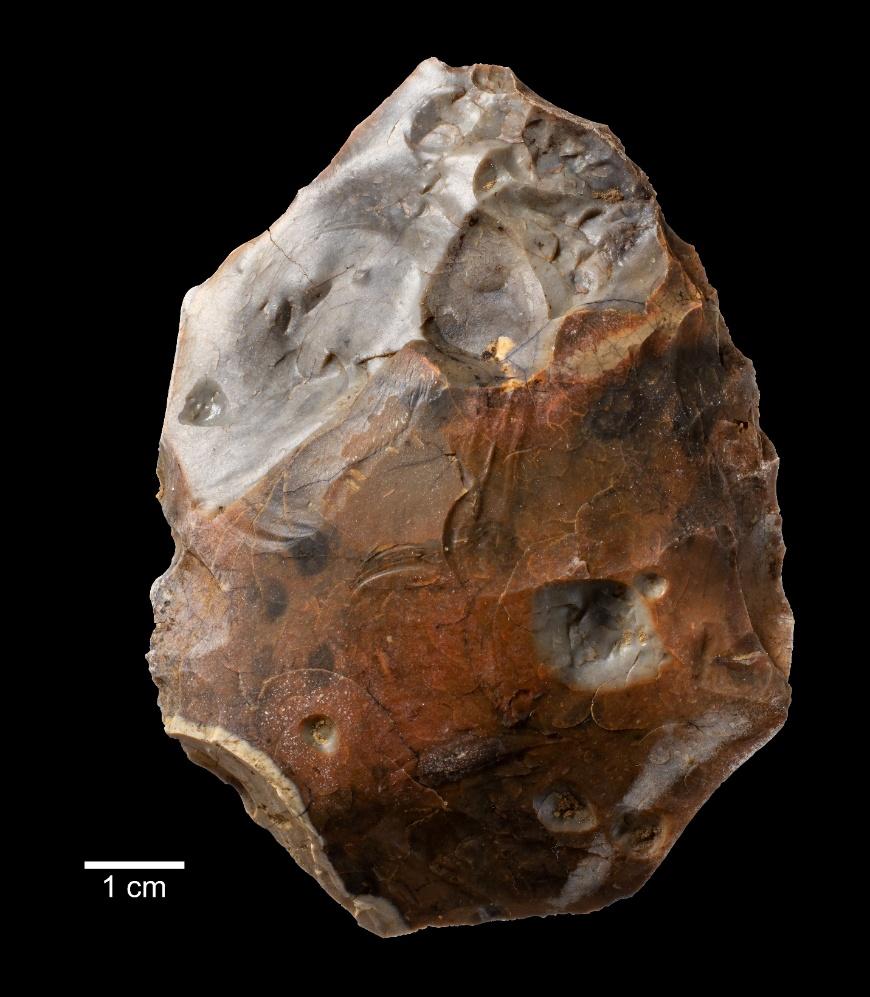
But where were the humans? Excavation of surrounding areas revealed a concentration of flint artefacts around the campfire. Remarkably, this included four heat-shattered handaxes that gave us a direct link between people and the campfire. This matched up with four other sites in Britain, France and Spain with evidence of fire use, also dated to around 400,000 years ago. But there was one more surprise.
Making fire
Human fire-use goes back deep in time (over a million years), perhaps by benefiting from wildfires and naturally cooked game. The next step was recovering embers to create campfires, but the critical turning point was the ability to make fire. From this point on, humans were no longer reliant on natural events but could regularly use fire where and when they wanted. When was this breakthrough? Sites in northern France had evidence of late Neanderthals making fire at 50,000 years, but a new piece of evidence from Barnham shows it to be considerably earlier.
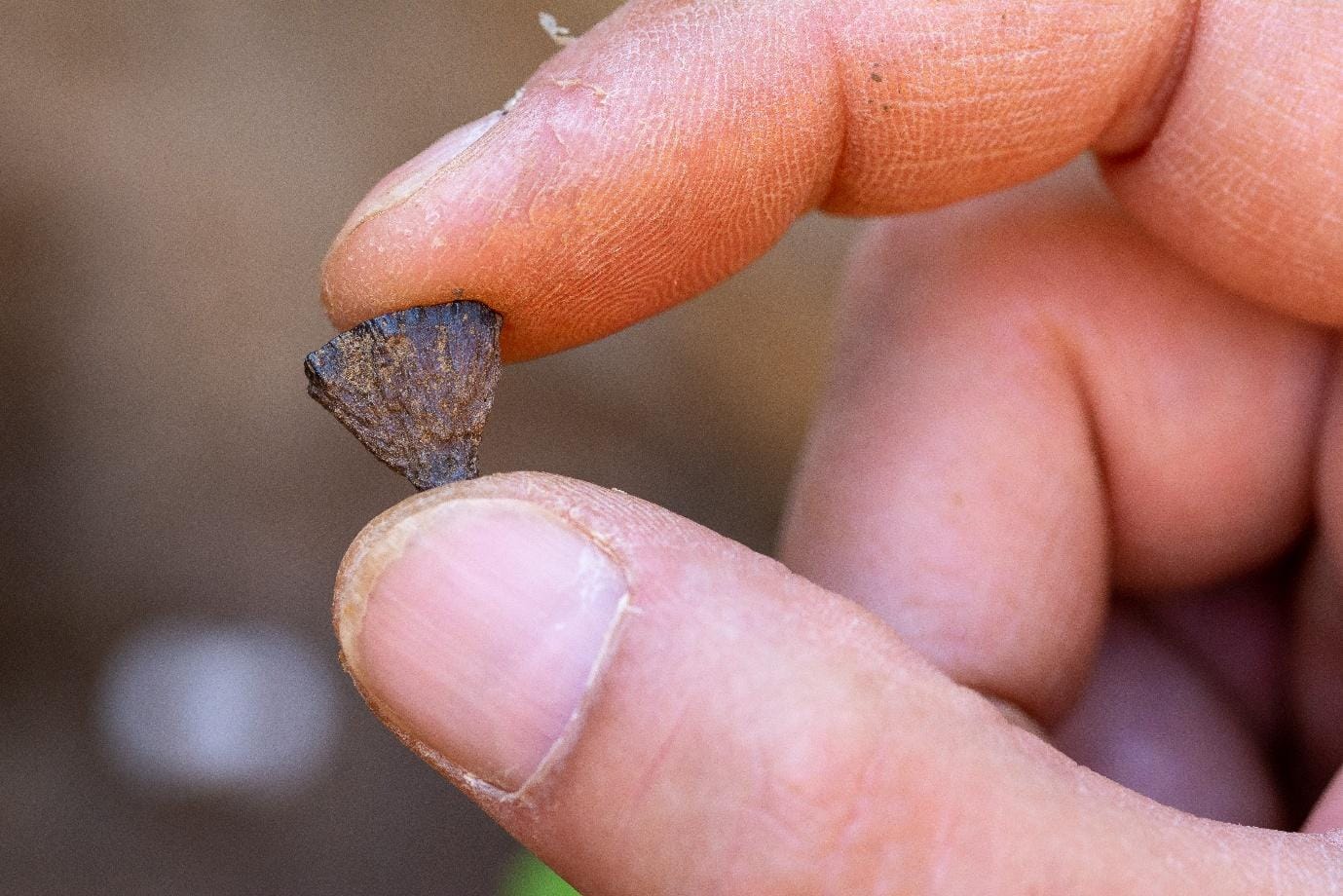
In 2017 we had excavated an area of the landsurface towards the eastern end of the site that contained concentrations of heated flint. Here, we had struggled to demonstrate human fire-use. But in among the heated flint, we had found a tiny piece of iron pyrite. It is well known that pyrite can be used to strike flint to create sparks to light tinder, but we also know that it occurs naturally in chalkland areas, such as this part of Suffolk. Almost ignored for several years, we puzzled over the pyrite again, and in fact found a second piece, but how could we link the pyrite to making fire? It took a while, but a solution emerged.
I’ve worked with Simon Lewis from 1988, since when he has worked on the geological aspects of our joint projects, many in this area of Suffolk, the Breckland. Part of the work has involved identifying stones in the river and glacial deposits of the area to understand the processes behind their deposition – rivers bringing quartz and quartzites from the Midlands, or ice sheets with sandstone from Yorkshire. In total he has identified 121,000 stones from 26 sites in the Breckland – a fantastic database for checking on the prevalence of pyrite. We checked the old record sheets, then physically checked the samples from around Barnham – not a single piece of pyrite had been found through 36 years of systematic fieldwork. In other words, pyrite is incredibly rare in the Breckland. The conclusion is that humans brought pyrite to Barnham with the intention of making fire – the earliest evidence anywhere in the world.
Intelligent Neanderthals
There are some incredible long-term implications of fire-making which have been written about elsewhere – improved diet and digestion through cooking, enlargement of the brain and the social importance – but it also provides insights into the knowledge and intelligence of early Neanderthals. Making fire is not easy. They had the knowledge of where to collect pyrite, how to strike it against flint to create sparks, and the properties of effective tinder – some dried fungi can be used – to create fire. Once discovered, this knowledge had to be transferred to the next generations, perhaps around the embers of a dwindling fire.
Further Reading
Davis, R.J, Hatch, M., Hoare, S., Lewis, S.G., Lucas C., Parfitt, S.A., Bello, S.M., Lewis, M., Mansfield, J., Najorka,J., O’Connor, S., Peglar, S., Sorensen, A., Stringer, C.B., Ashton, N.M. (2025). Earliest evidence of making fire. Nature.
Project team
Nick Ashton, Silvia Bello, Rob Davis, Marcus Hatch, Sally Hoare, Mark Lewis, Simon Lewis, Claire Lucas, Jordan Mansfield, Jens Najorka, Simon O’Connor, Simon Parfitt, Sylvia Peglar, Andrew Sorensen and Chris Stringer
With thanks to…
Mareike Stahlschmidt, Christopher Jeans, Will Lord and Craig Williams
Duke of Grafton, Matthew Hawthorne, David Heading, Edward Heading, Richard Heading, David Switzer, Luke Dale, Xin Ding, Sophie Hunter, Dylan Jones, Izzy Klipsch, Murat Özturan, Aaron Rawlinson, Ian Taylor and Tudor Bryn Jones.
The research has been funded by the Calleva Foundation.