
British Museum volunteers Xin Ding and Steve Barlin, and PAB member Dr Claire Lucas relate how they identified the first fire-cracked handaxe from Barnham while refitting heat shattered stones.
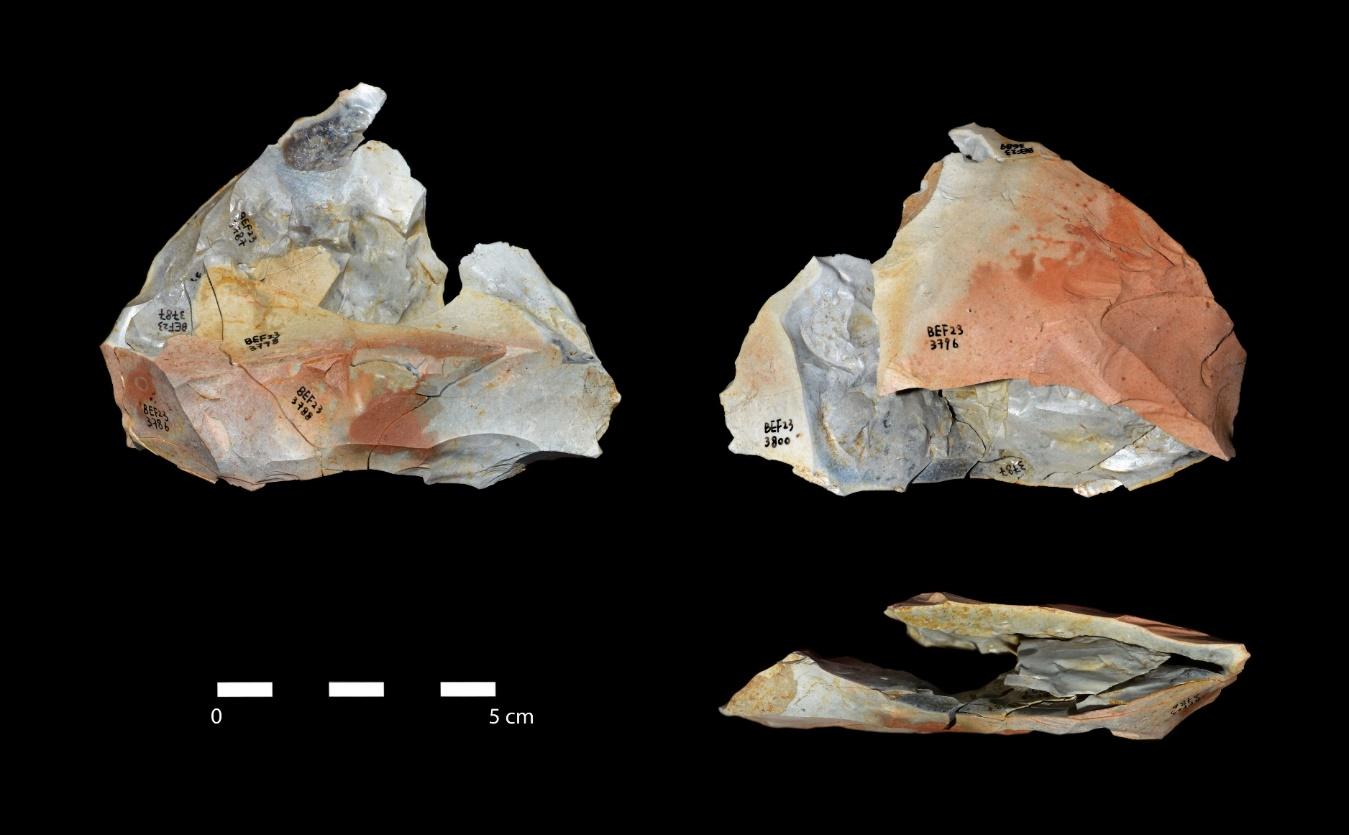
When we think about archaeological discoveries, we first think of the amazing objects and structures that immediately stand out as they are being unearthed by the diggers. However, remarkable discoveries also occur after the excavation, when the finds and samples are meticulously processed and studied in the laboratory. Imagine our excitement when we pieced together 400,000-year-old heated flint fragments to reveal, for the first time, an exquisite fire-cracked handaxe from Barnham in Suffolk.
Flint refitting usually involves replacing flakes onto a core to reconstruct the original block as it was before knapping, so that we can then backtrack the reduction method employed by the flintknapper. Beforehand, joining fragments of broken objects is often required to fix past accidents, when flakes broke during flint knapping or later, when tools were used or even discarded on the floor and exposed to trampling, frost or fire. These events can leave us with more pieces to study than those initially produced by the prehistoric inhabitants.
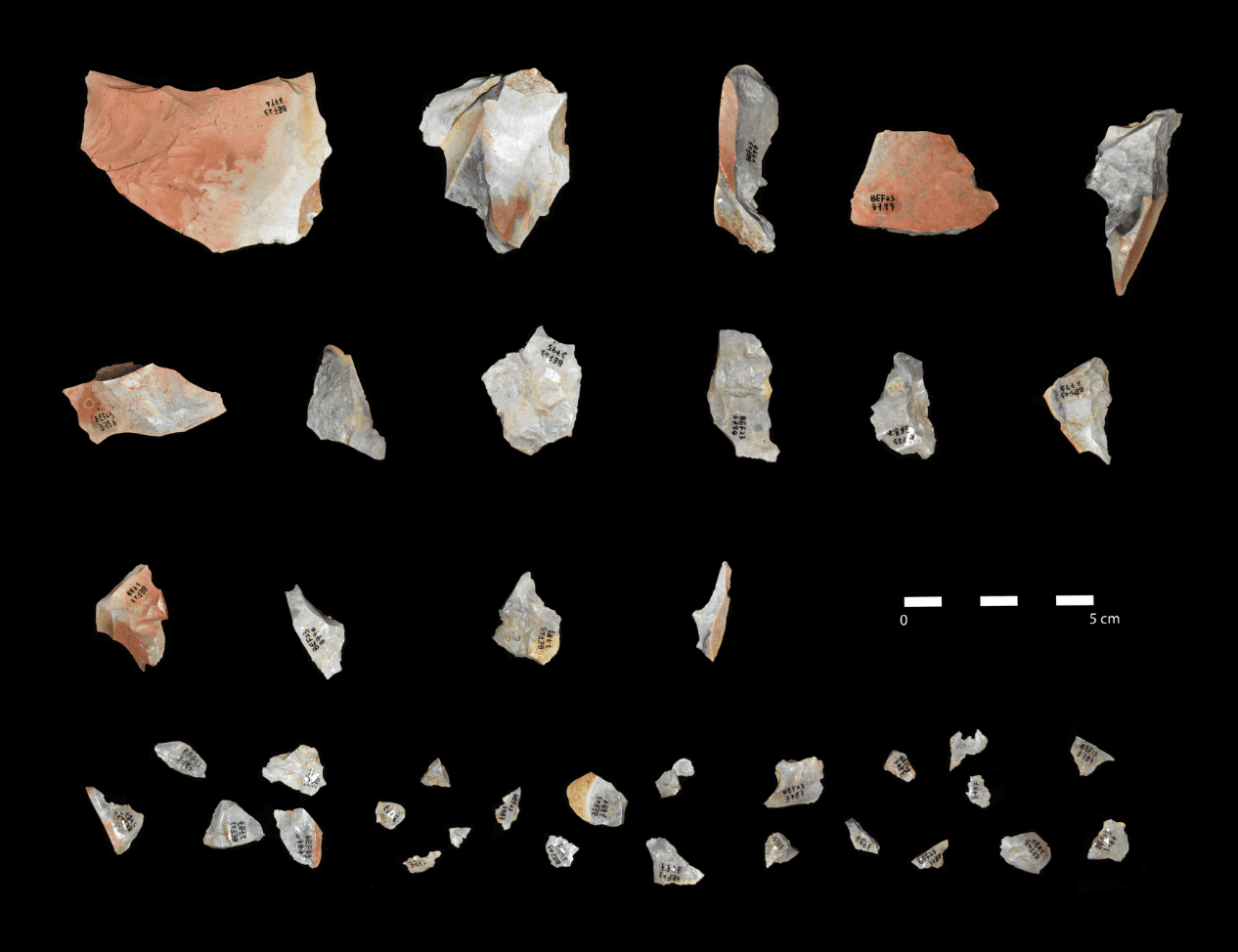
Flint may explode when heated to high temperatures. Refitting heat shattered materials, even unknapped stones, is a way to appreciate the effects of fire on the whole block and map the fragments distribution to see how they moved across the site. The idea of attempting such refitting had emerged on site as quantities of heat shattered flint were found alongside handaxe manufacturing flakes in the Areas I and VI of Barnham East Farm. In the field, all burning evidence was thoroughly recorded with a question in mind: Did the hominins who produced handaxes here also make fire or could it result from a wildfire? Amongst the methods available to characterize burning events, refitting is always a long shot as it is an uncertain, time-consuming exercise. In the summer 2023, the discovery of a heated flint cluster including a finely knapped fragment in square A2 finally convinced us it was worth trying.
In the autumn of 2023, post excavation tasks were undertaken at a British Museum store and research facility by a team of 3 to 6 volunteers meeting weekly. As a standard start for refitting, all heated stones from Area I were washed and labelled before being laid out on a table. This preparatory work took weeks due to the sheer number of pieces, most of which are tiny fragments less than 2 cm long and required miniature handwriting to apply their excavation number. Once the clean pieces exhibiting neat fractures were laid out, refitting of the 3D puzzle began.
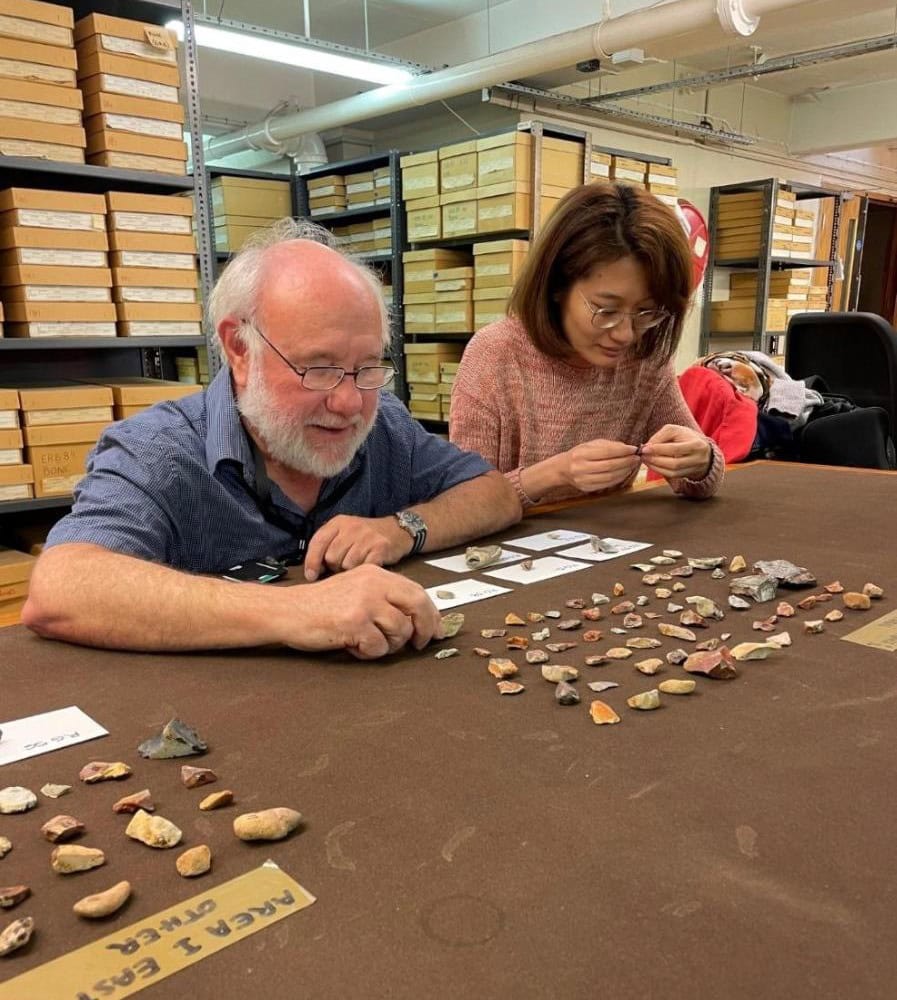
To identify items likely to refit, we look at the colours of course to spot the heated pieces sharing similar pale and reddish tints and, most importantly, we observe the break shapes and surface textures. Looking closely, there are surfaces with coarser or finer grain, some are smooth and shiny while others show a rough texture that is typical of some thermal fractures. Thus, scrutinizing all pieces for resemblances, we started gathering those looking alike together.
Refitting sets built up gradually over a couple of months. All it needed at last was some imagination and boldness to assemble them and a bit of double-sided tape and foam to temporarily hold the refit groups whilst still allowing separation when need be. Like any puzzle, flint refitting can be addictive. Second and third calls soon became necessary to ensure all volunteers stopped for lunch. Enthusiasm reached a peak when the refit group with the finely knapped piece from the A2 cluster started looking more and more like a handaxe. We were finally able to assemble parts of both faces confirming the tool was indeed bifacially knapped. The fire-cracked handaxe is still incomplete as we write these lines but, amazingly, we managed to refit 25 pieces, most of which are tiny fragments resulting from a severe exposure to fire.
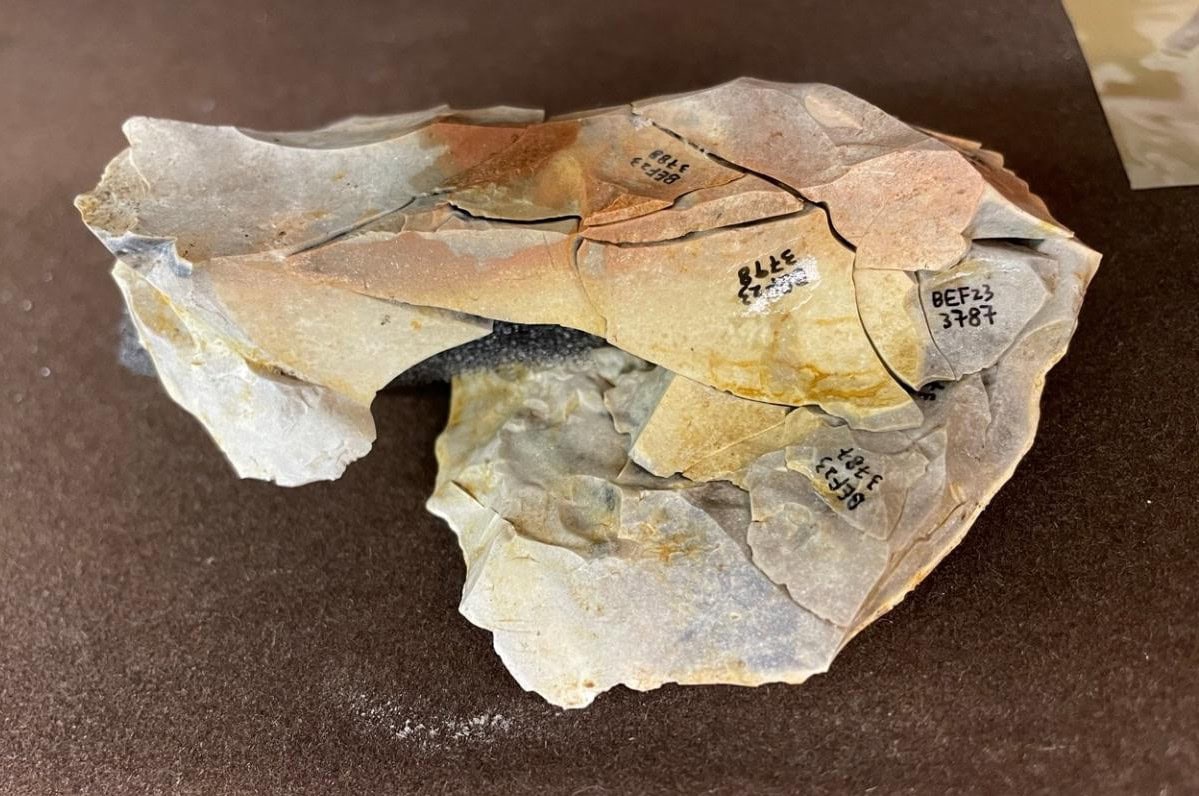
Alongside many unknapped heated pebbles, another three fire-cracked handaxes and two flakes were refitted by the end of the following autumn. Most of the refits achieved so far reassemble fragments found very close to one another in the field. They support a good spatial preservation of the sediments and materials in some parts of Area I which might have laid relatively undisturbed since the fire occurred.
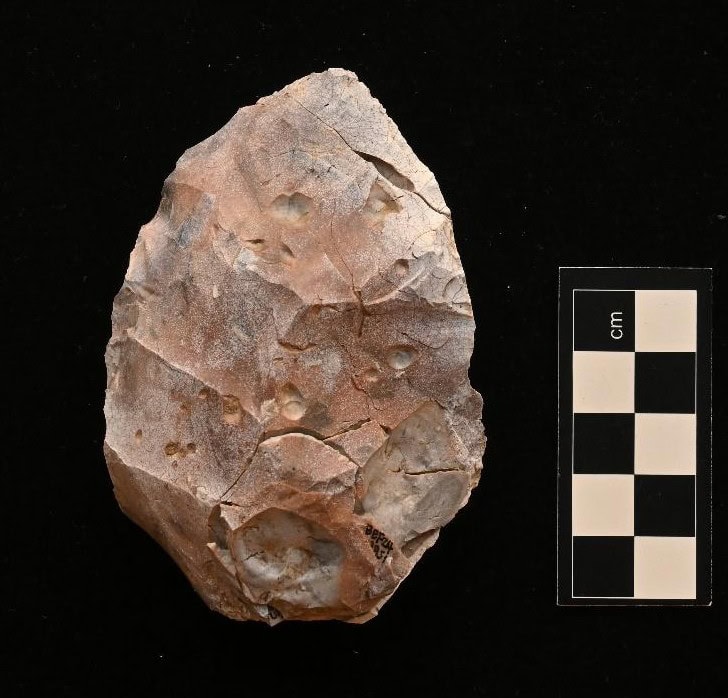
Meanwhile, in the lab, an array of scientific analyses was undertaken on a variety of fire evidence collected in the vicinity of the fire-cracked handaxes, including heated sediments, charcoals, and pyrite fragments. The results of these analyses provided further evidence of the making of fire by Barnham handaxe makers, and the patiently refitted fire-cracked handaxes became a vivid image of the technologies of these early humans. We are always one click away from a clearer picture of the past…
Further Reading
Davis, R.J, Hatch, M., Hoare, S., Lewis, S.G., Lucas C., Parfitt, S.A., Bello, S.M., Lewis, M., Mansfield, J., Najorka,J., O’Connor, S., Peglar, S., Sorensen, A., Stringer, C.B., Ashton, N.M. (2025). Earliest evidence of making fire. Nature.