Posted on

400,000-year-old Neanderthal Fire-Making Technology

Rob Davis explains how excavations by the British Museum at Barnham, Suffolk, have uncovered evidence for arguably the most important innovation in human history, the ability to make fire. 

Looking back through history and prehistory, it is clear how fundamental fire has been to the development of human civilisation. Great changes in human existence have had fire at the heart of them. The agricultural revolution required fire to turn crops into food, creating the surpluses that enabled the first towns, cities and monuments. The Copper Age, Bronze Age, Iron Age, all dependant on fire to extract metal from ore and shape and combine it to make tools, weapons, jewellery and more. The industrial revolution and space age, powered by combustion. Fire is not just utilitarian, it is prominent in belief systems across the world, both extant and historically documented. Prometheus, Vesta’s flame, Shiva the divine cosmic dancer, the burning bush, Sacred Fire, the Holy Spirit, incense, funeral pyres; fire emblematic of and a conduit to the divine. We are a species that has harnessed and exploited the transformative power of fire, not just to survive and thrive on this planet, but also to make sense of the world around us.

The Barnham evidence
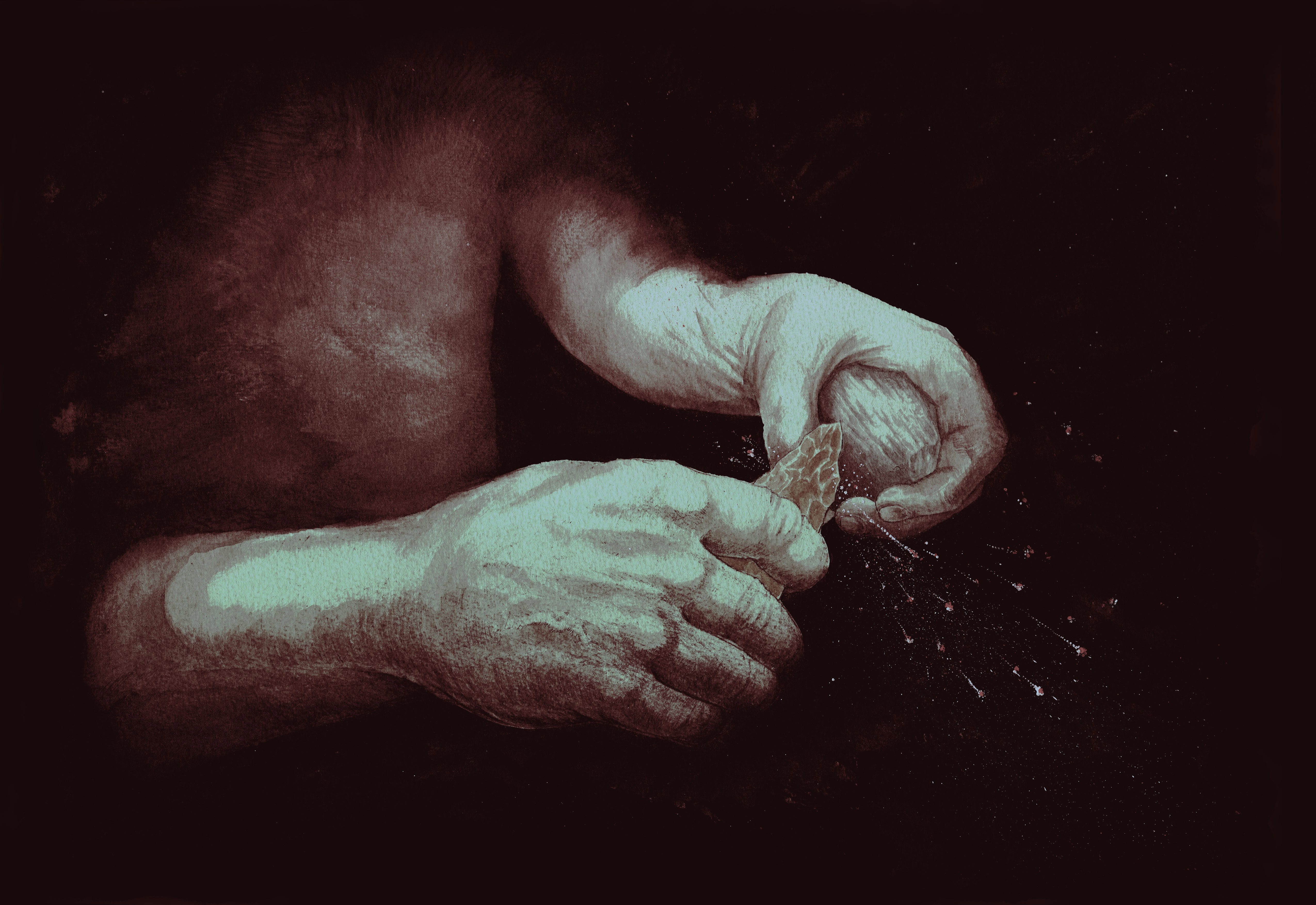
sparks being produced by striking iron pyrite with a flint handaxe
Artist’s reconstruction of sparks being produced by striking iron pyrite with a flint handaxe. (Credit: Craig Williams, Illustrator, Department of Europe and Prehistory)

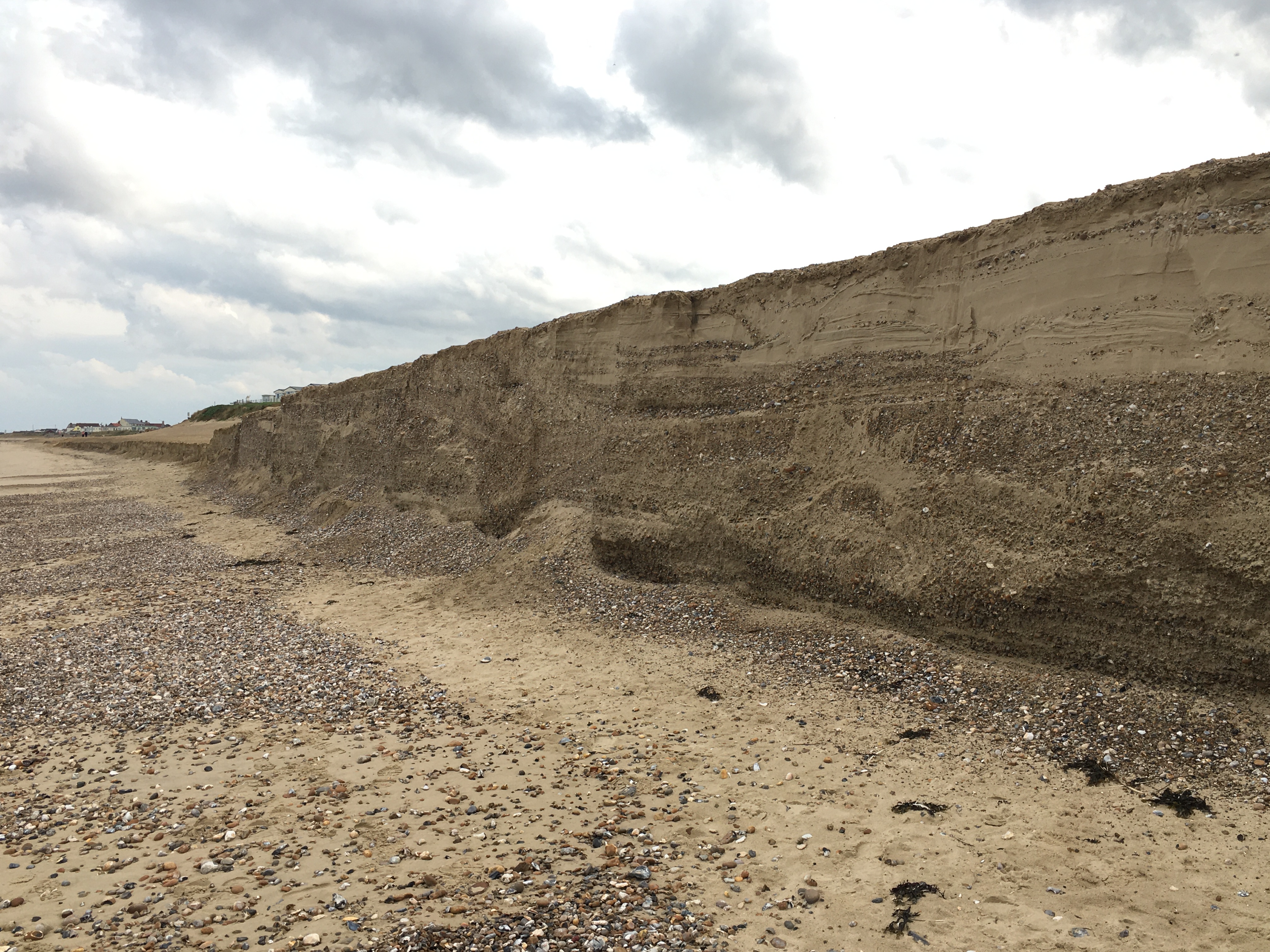
Since 2013, a team of archaeologists and scientists from the British Museum, Natural History Museum, Queen Mary University of London, UCL, University of Liverpool and Leiden University has been investigating the evidence for early fire-use at the Lower Palaeolithic site at Barnham, Suffolk. The evidence shows that the ability to create and control fire is not restricted to our own species, but a technology shared with other types of human that inhabited this world 400,000 years ago. Excavation of an ancient land surface has revealed an abundance of burnt materials associated with stone tools made and discarded by early Neanderthals. A patch of heated sediment, reddened like fired clay, is the remnants of a Neanderthal campfire. Adjacent to this is a cluster of artefacts, including fire-cracked handaxes, residues of fire-side activities. Most important of all, fragments of iron pyrite, brought to the site by Neanderthals for one purpose, to light fires by striking the pyrite with flint to create sparks. This is an extraordinary discovery, pushing back the earliest evidence for this technology by some 350,000 years.

Fire and early humans

Mastering fire is arguably one of the most important developments in human evolution. It seems likely that there is a very long history of human interaction with fire over more than a million years. It has been envisaged as a three stage process, beginning with foraging and scavenging in burnt landscapes following forest fires. The second stage involved the harvesting of wildfires, which were an occasional and unpredictable resource in the landscape. Embers collected in this way would have to be transported and then maintained, and once extinguished it became a waiting game for the next lightning strike. It is only with the third stage, the ability to create fire, that it could become a reliable addition to daily life. The knowledge of how to make fire enabled habitual use, which ultimately led to a reliance on fire for survival.
Artist’s reconstruction of an early human demonstrating the use of iron pyrite with flint to create sparks and light a fire
Artist’s reconstruction of an early human demonstrating the use of iron pyrite with flint to create sparks and light a fire. (Credit: Craig Williams, Illustrator, Department of Europe and Prehistory)

For early human hunter-gatherers, fire provided warmth and light and safety, a means to cook food to remove toxins and tenderise meat. It enabled humans to spread and thrive in colder, harsher environments, to explore subterranean spaces. Some of these benefits likely impacted biological and social evolution too. Cooking widened the range of available food sources and made food more readily digestible, which may have led to changes in the gut, but also freed up energy for development of the brain. Campfires acted as social hubs, focal points for interactions. Critically, fire extended the waking day by several hours. Humans live in complex social groups that require a significant daily time investment to maintain relationships. Socialising by firelight freed up daylight hours for hunting and gathering, collecting resources and making tools. It provided a setting for intense socialisation and development of language, storytelling and myth-making. With fire, humans could both feed and navigate larger, more complex societies.

The archaeology of early fire-use
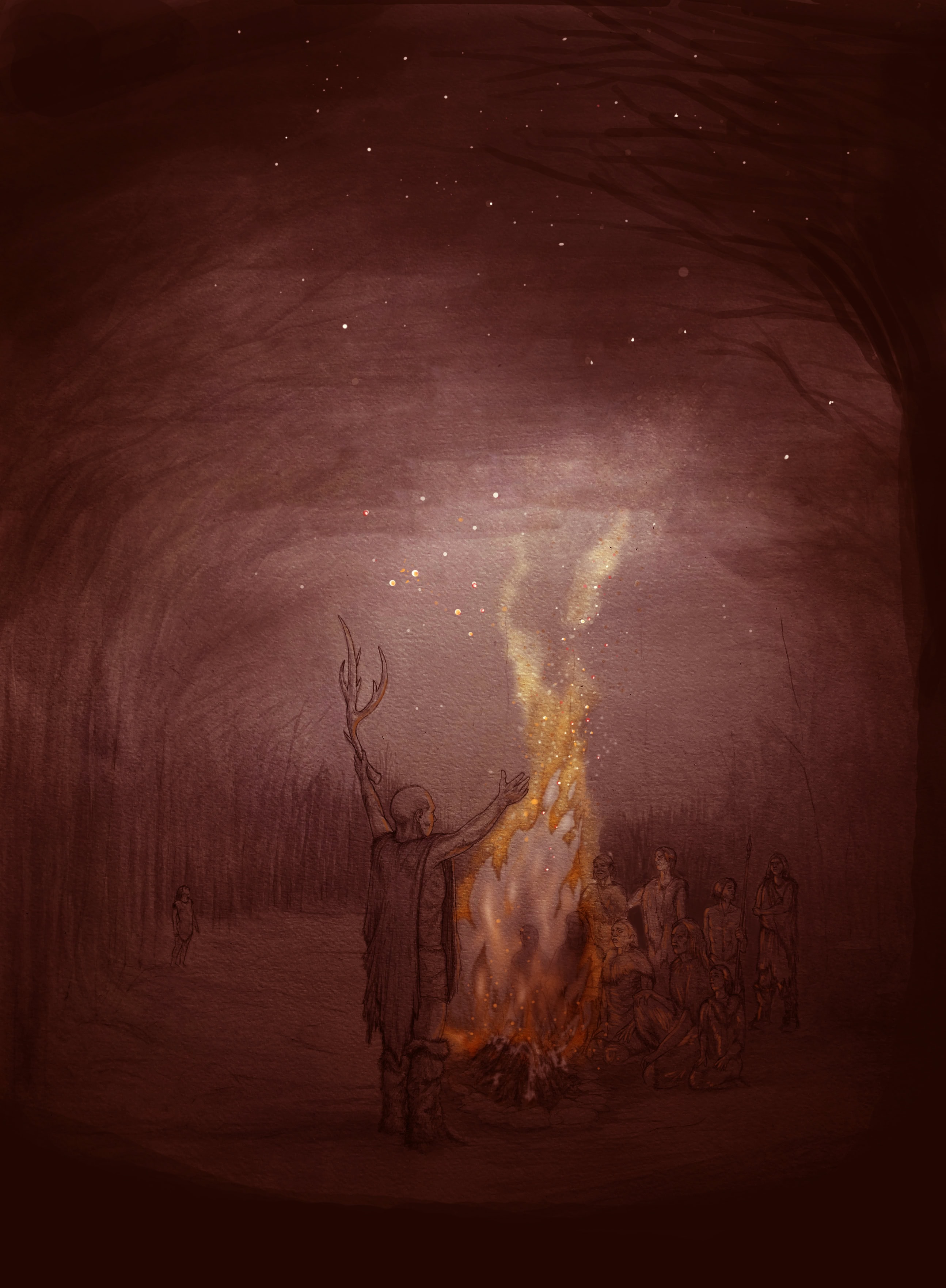
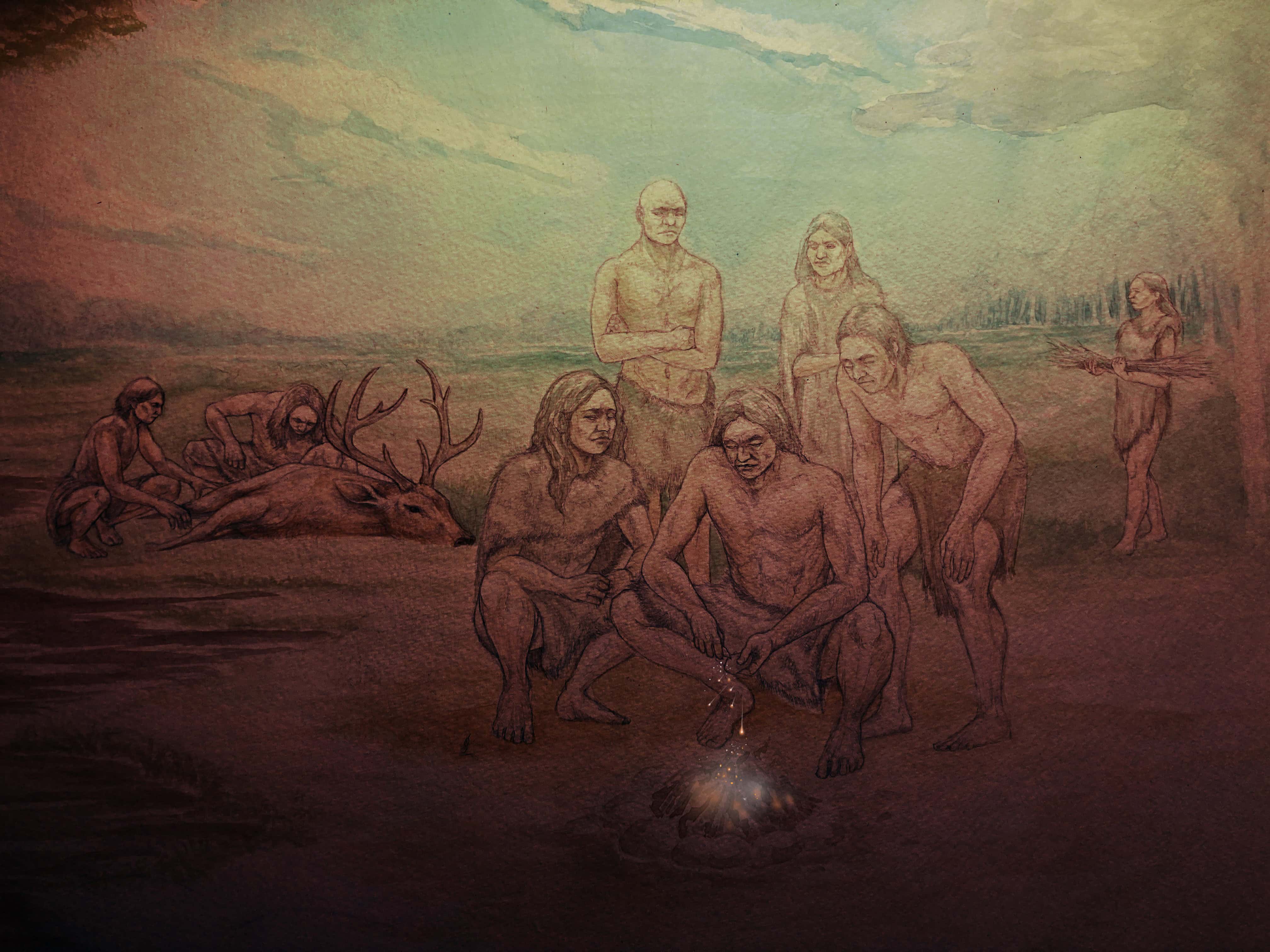
Artist’s reconstruction of a group of early humans gathered around a fire after dusk
Artist’s reconstruction of a group of early humans gathered around a fire after dusk. (Credit: Craig Williams, Illustrator, Department of Europe and Prehistory)

There is still much we don’t know. To what extent is the evidence from Barnham representative of technological practises across the Palaeolithic world 400,000 years ago? Did other large-brained human species, such as the Denisovans in eastern Eurasia or early Homo sapiens in Africa, also light their own fires? And if so, did they invent fire-lighting technology independently, or adopt it through exchange of ideas and behaviours between human groups, or was it inherited from a common ancestor? How did the use of fire by early humans vary through time and space? 

The problem is that fire-use rarely preserves well in the archaeological record and, prior to the development of hearth structures, it is notoriously hard to demonstrate. Ash and charcoal can easily be blown or washed away, and baked sediments can be eroded and dispersed. Heated artefacts survive but it is often difficult to rule-out incidental burning in a wildfire. Many of our early sites preserve evidence of activities related to resource collection, tool production or butchery, situations that wouldn’t have necessarily called for the immediate use of fire. Domestic sites located in sheltered parts of the landscape outside of major river valleys or coastal plains are potentially underrepresented in the archaeological record. The evidence is patchy, ambiguous and hard to interpret.

In light of these challenges, it is the preservation of the evidence at Barnham that is exceptional, whereas the technology itself may have been widespread 400,000 years ago. Indeed, there are other sites of similar age that also provide evidence of fire-use in the form of baked sediments, charcoal and associated heated artefacts and bones. Notable sites include Beeches Pit, located just 10 km to the southwest of Barnham in Suffolk, Menez-Dregan and Terra Amata in France, and Gruta da Aroeira in Portugal. Together, these sites point to an increase in the importance of fire to early humans between 500,000 and 400,000 years ago. Barnham provides an explanation, the advent of fire-making.  

The transformative power of fire

Through time, humans would come to find ways to use fire to advance other technologies. The first archaeologically visible applications occur from 300,000 years ago. The rare survival of wooden artefacts at Schöningen, Germany, show the use of fire to harden spear tips. Tools begin to be hafted at this time, with evidence for the use of fire to produce birch bark tar for use as a glue for attaching stone blades and points to handles. At Qesem Cave, Israel, there is the earliest evidence for controlled heating of stone to improve its qualities for tool production. There was likely a multitude of other uses that do not leave an imprint on the archaeological record. Much later came ceramics and metals. Bit by bit, humans found new ways to utilise the power of fire to change the properties of materials and start to transform the world around them. 

Many aspects of early human day-to-day life are alien to most of us in the modern world. Few people today have made tools from stone or wood, foraged for nuts, roots and tubers, or hunted animals with spears and butchered them with stone tools. We do know fire, though. Sitting round a campfire, listening to the chatter and laughter of our companions while staring at the flickering flames, it feels timeless, primeval. This is a profoundly human experience, which connects us across deep time to early human societies, be they Neanderthal or Homo sapiens or any other fire-using species, and in doing so it speaks to their unmistakable humanity.

Further Reading

Davis, R.J, Hatch, M., Hoare, S., Lewis, S.G., Lucas C., Parfitt, S.A., Bello, S.M., Lewis, M., Mansfield, J., Najorka,J., O’Connor, S., Peglar, S., Sorensen, A., Stringer, C.B., Ashton, N.M. (2025). Earliest evidence of making fire. Nature.

Project team

Nick Ashton, Silvia Bello, Rob Davis, Marcus Hatch, Sally Hoare, Mark Lewis, Simon Lewis, Claire Lucas, Jordan Mansfield, Jens Najorka, Simon O’Connor, Simon Parfitt, Sylvia Peglar, Andrew Sorensen and Chris Stringer

With thanks to…

Mareike Stahlschmidt, Christopher Jeans, Will Lord and Craig Williams 

Duke of Grafton, Matthew Hawthorne, David Heading, Edward Heading, Richard Heading, David Switzer, Luke Dale, Xin Ding, Sophie Hunter, Dylan Jones, Izzy Klipsch, Murat Özturan, Aaron Rawlinson, Ian Taylor and Tudor Bryn Jones. 

The research has been funded by the Calleva Foundation.
Posted on

The Quest for Fire

Nick Ashton explains how four years of forensic investigations at Barnham in Suffolk demonstrate the world’s oldest evidence of making fire at 400,000 years ago.

Discovery

team starting to plan the strategy for excavation
Quarry cut in foreground revealing reddened cay beneath the black ancient soil. The team is starting to plan the strategy for excavation. (Photo: Rob Davis)

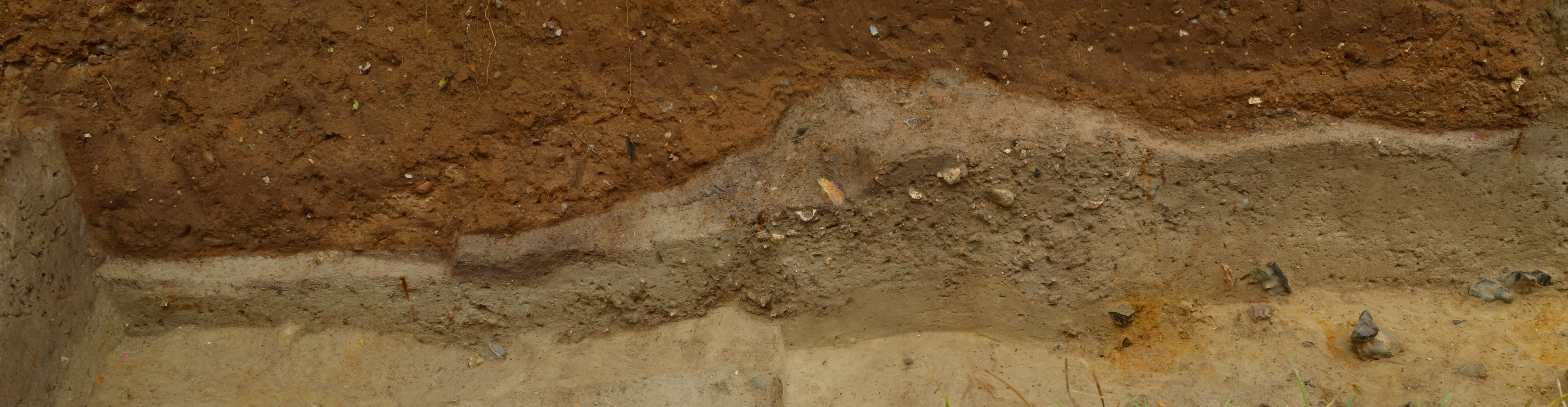
The first inkling that I had of something unusual was a small patch of reddened clay, almost terracotta in colour. It was a sunny afternoon in June 2021, and the seasonal excavation was midway through the three weeks, running like clockwork in the overgrown former claypit. I was surplus to requirements, so decided to investigate a quiet, shaded part of the site. The min-digger had provided a tantalising glimpse of a dark ancient soil in 2019, but with Covid in 2020, we hadn’t had time to investigate further. With half a thought for a quiet nap in the cool of the large oak, I instead picked up my spade and trowel, clearing the area of two seasons of leaf-litter and re-found the patch of dark organic-rich clay – the soil of an ancient landsurface.

Previous excavations of this 5 cm thick dark clay had revealed very little archaeology, but it marked much richer pond-edge sediments that lay underneath, containing flint flakes and tools, left by early Neanderthals over 400,000 years ago. A lone handaxe had been found on the landsurface in 1991, but some 15 m to the west. 

Trowelling down to the surface of the clay, revealed an area a metre across and on the front edge, the cut made by clay-pit workers over a century earlier. It was in cleaning down this steep edge that the reddened clay was first revealed, with dark clay above and below. My immediate thought was that the reddening indicated heating. I waited until the end of the afternoon when colleagues wandered over to take a look – a few raised eyebrows, gentle nods and the understated comment ‘intriguing’. We all shared that wonderful feeling of being on the threshold of an important discovery.

Excavation and proof

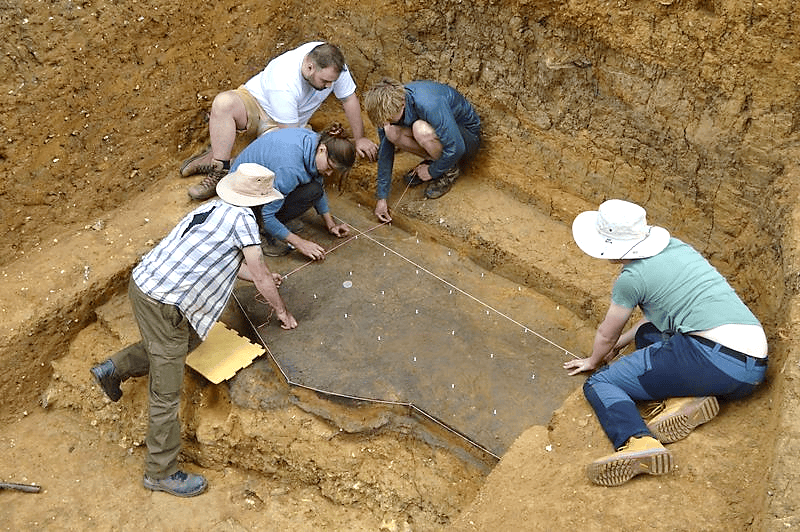
Having a hunch of early fire-use is not good enough, so it took four years to convincingly demonstrate that the heating was caused by humans, not part of a natural fire. Unfortunately, archaeology involves destruction, so trying to understand the extent of the reddened clay involved a lot of head-scratching to ensure we understood the form of the structure, as well as leaving enough in place for future researchers. We were fortunate, as one of our team was Claire Lucas, a brilliant excavator with much experience on similar sites in France. Tentative steps led to excavating diagonally opposed corners giving us a clear idea of the size – about 50 cm across – and enough sediment for analysis. In fact, quarrying in the 1900s had probably removed over half the structure.

Excavation of a Neanderthal fireplace at Barnham
Excavation of a Neanderthal fireplace at Barnham, Suffolk, UK. (Photo: Jordan Mansfield)

So how could we distinguish between natural and human burning? First, we had to demonstrate that the reddened clay had been heated and, if so, was it in situ? Fortunately, we now have a raft of geochemical tests and specialists in France, Germany, Austria and Britain who could help. Changes in the mineral structure of the clay showed heating to over 700 °C, while microscopic examination indicated that the sediment was in place, and not moved. Furthermore, tests suggested not just one burning event but repeated burning in the same place. The conclusion was clear – we had a campfire, or hearth, that had been used by people on several occasions.

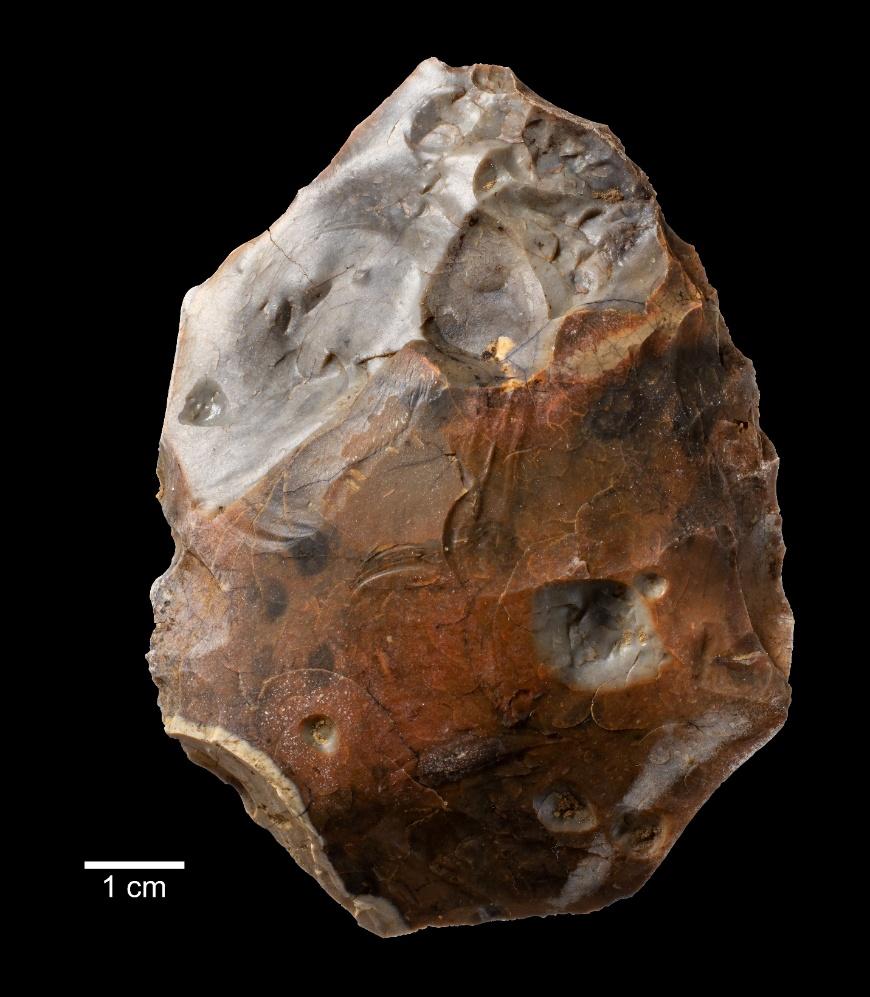
But where were the humans? Excavation of surrounding areas revealed a concentration of flint artefacts around the campfire. Remarkably, this included four heat-shattered handaxes that gave us a direct link between people and the campfire. This matched up with four other sites in Britain, France and Spain with evidence of fire use, also dated to around 400,000 years ago. But there was one more surprise.

fire-cracked handaxe found next to a Neanderthal fireplace
A fire-cracked handaxe found next to a Neanderthal fireplace at Barnham, Suffolk, UK. (Photo: Jordan Mansfield)

Making fire

Human fire-use goes back deep in time (over a million years), perhaps by benefiting from wildfires and naturally cooked game. The next step was recovering embers to create campfires, but the critical turning point was the ability to make fire. From this point on, humans were no longer reliant on natural events but could regularly use fire where and when they wanted. When was this breakthrough? Sites in northern France had evidence of late Neanderthals making fire at 50,000 years, but a new piece of evidence from Barnham shows it to be considerably earlier.

fragment of iron pyrite
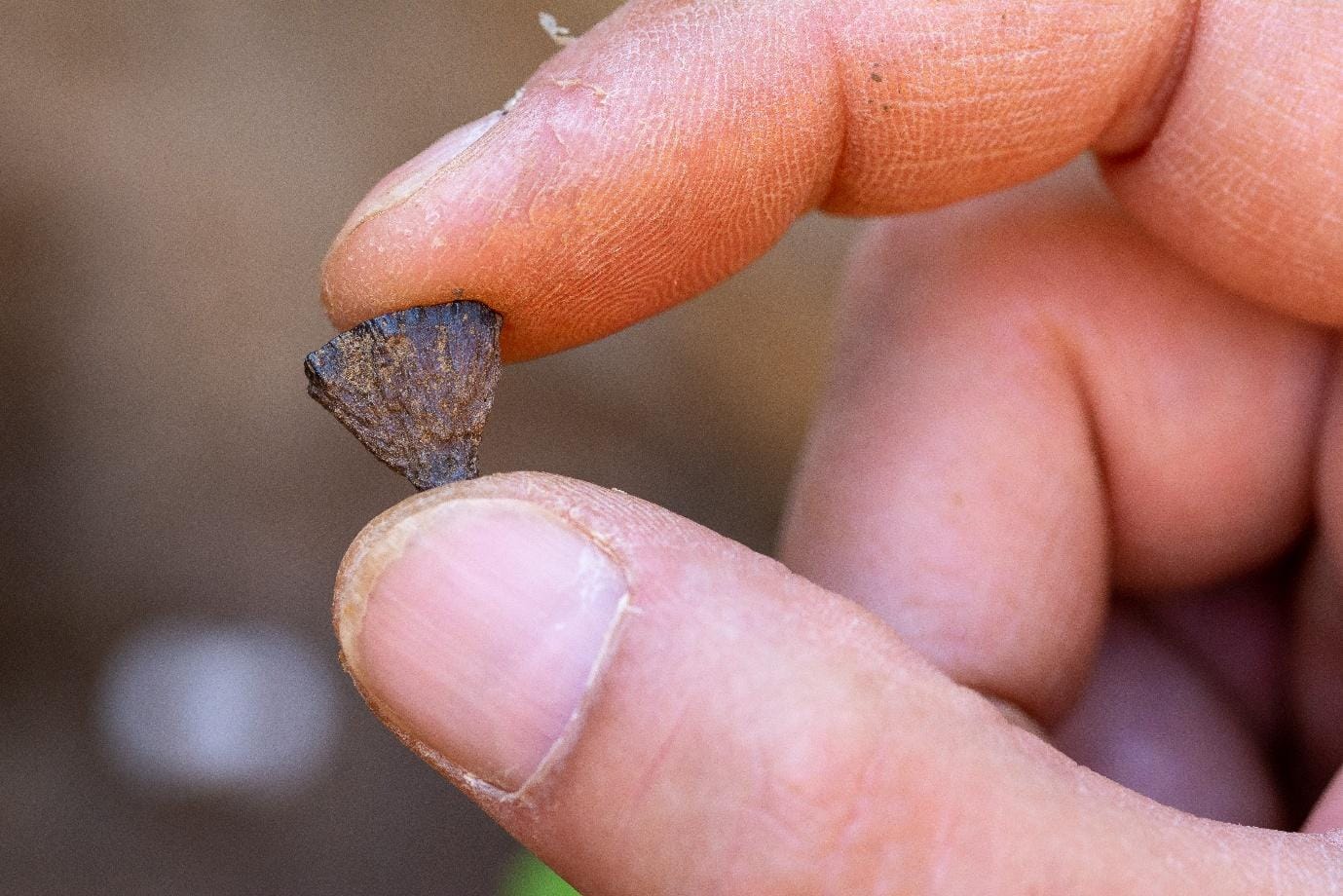
A fragment of iron pyrite found on a 400,000 year old land surface at Barnham, Suffolk, UK. (Photo: Jordan Mansfield)

In 2017 we had excavated an area of the landsurface towards the eastern end of the site that contained concentrations of heated flint. Here, we had struggled to demonstrate human fire-use. But in among the heated flint, we had found a tiny piece of iron pyrite. It is well known that pyrite can be used to strike flint to create sparks to light tinder, but we also know that it occurs naturally in chalkland areas, such as this part of Suffolk. Almost ignored for several years, we puzzled over the pyrite again, and in fact found a second piece, but how could we link the pyrite to making fire? It took a while, but a solution emerged.

I’ve worked with Simon Lewis from 1988, since when he has worked on the geological aspects of our joint projects, many in this area of Suffolk, the Breckland. Part of the work has involved identifying stones in the river and glacial deposits of the area to understand the processes behind their deposition – rivers bringing quartz and quartzites from the Midlands, or ice sheets with sandstone from Yorkshire. In total he has identified 121,000 stones from 26 sites in the Breckland – a fantastic database for checking on the prevalence of pyrite. We checked the old record sheets, then physically checked the samples from around Barnham – not a single piece of pyrite had been found through 36 years of systematic fieldwork. In other words, pyrite is incredibly rare in the Breckland. The conclusion is that humans brought pyrite to Barnham with the intention of making fire – the earliest evidence anywhere in the world.

Intelligent Neanderthals

There are some incredible long-term implications of fire-making which have been written about elsewhere – improved diet and digestion through cooking, enlargement of the brain and the social importance – but it also provides insights into the knowledge and intelligence of early Neanderthals. Making fire is not easy. They had the knowledge of where to collect pyrite, how to strike it against flint to create sparks, and the properties of effective tinder – some dried fungi can be used – to create fire. Once discovered, this knowledge had to be transferred to the next generations, perhaps around the embers of a dwindling fire.  

Further Reading

Davis, R.J, Hatch, M., Hoare, S., Lewis, S.G., Lucas C., Parfitt, S.A., Bello, S.M., Lewis, M., Mansfield, J., Najorka,J., O’Connor, S., Peglar, S., Sorensen, A., Stringer, C.B., Ashton, N.M. (2025). Earliest evidence of making fire. Nature.

Project team

Nick Ashton, Silvia Bello, Rob Davis, Marcus Hatch, Sally Hoare, Mark Lewis, Simon Lewis, Claire Lucas, Jordan Mansfield, Jens Najorka, Simon O’Connor, Simon Parfitt, Sylvia Peglar, Andrew Sorensen and Chris Stringer

With thanks to…

Mareike Stahlschmidt, Christopher Jeans, Will Lord and Craig Williams 

Duke of Grafton, Matthew Hawthorne, David Heading, Edward Heading, Richard Heading, David Switzer, Luke Dale, Xin Ding, Sophie Hunter, Dylan Jones, Izzy Klipsch, Murat Özturan, Aaron Rawlinson, Ian Taylor and Tudor Bryn Jones. 

The research has been funded by the Calleva Foundation.
 

Posted on

A Big Puzzle: the refitting of a burnt handaxe from Barnham

British Museum volunteers Xin Ding and Steve Barlin, and PAB member Dr Claire Lucas relate how they identified the first fire-cracked handaxe from Barnham while refitting heat shattered stones.

When we think about archaeological discoveries, we first think of the amazing objects and structures that immediately stand out as they are being unearthed by the diggers. However, remarkable discoveries also occur after the excavation, when the finds and samples are meticulously processed and studied in the laboratory. Imagine our excitement when we pieced together 400,000-year-old heated flint fragments to reveal, for the first time, an exquisite fire-cracked handaxe from Barnham in Suffolk.

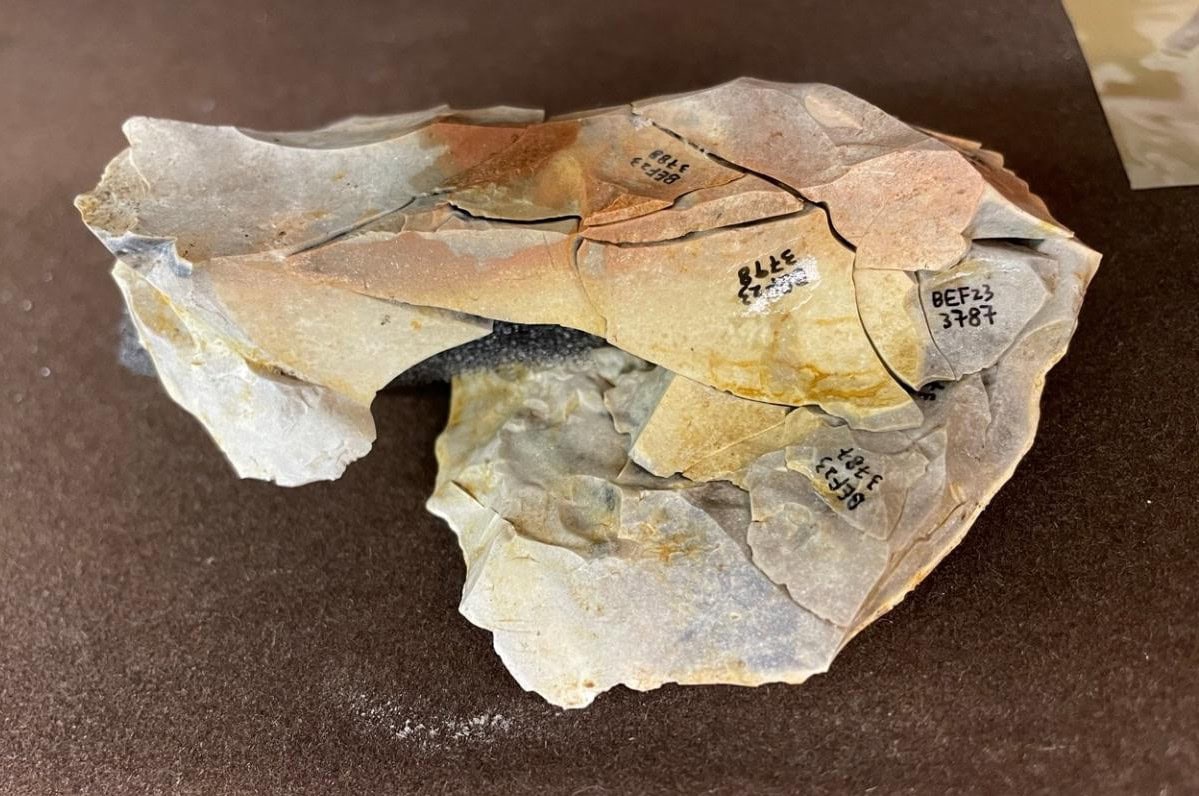
fire-cracked handaxe
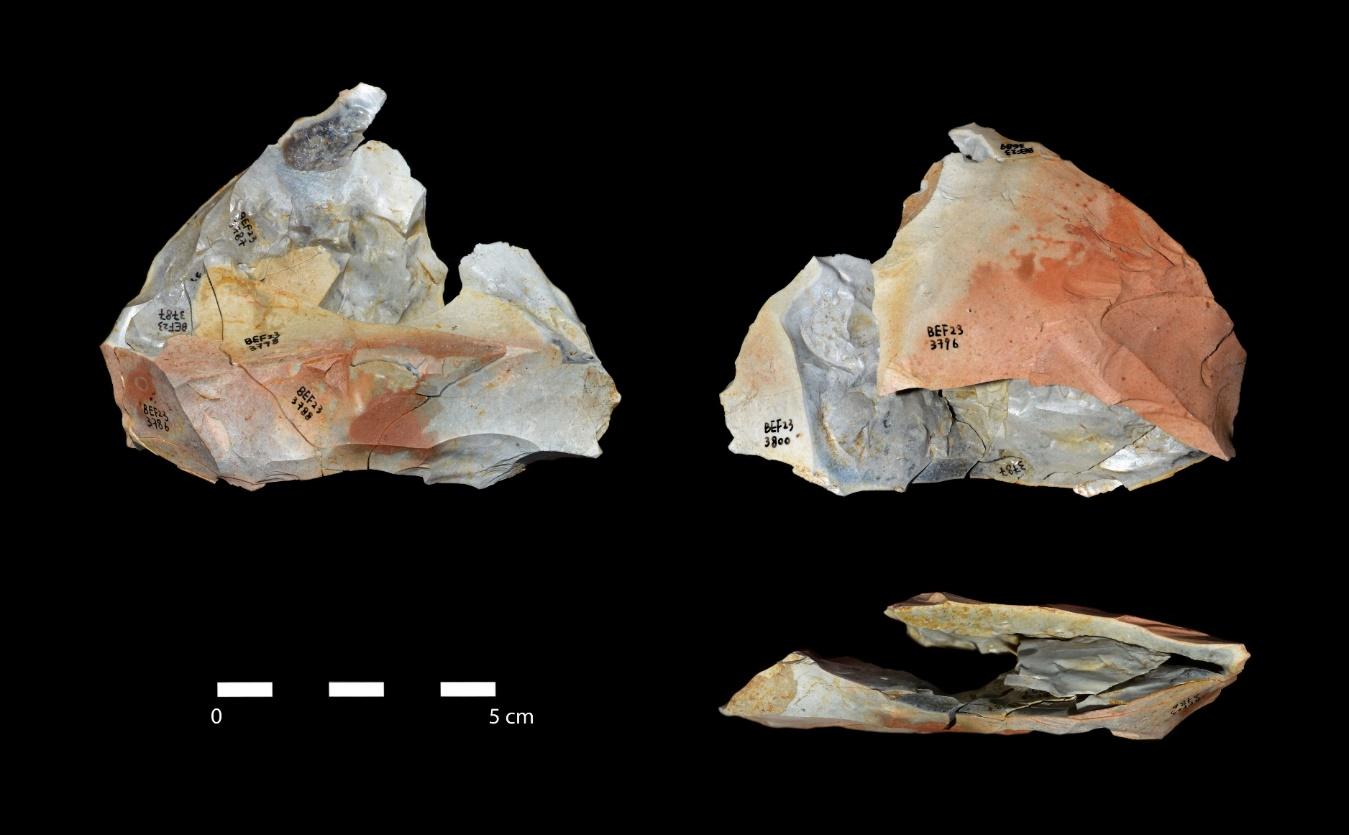
The first fire-cracked handaxe identified at Barnham, currently refitted from 25 pieces and still incomplete. (Photo: Claire Lucas)

Flint refitting usually involves replacing flakes onto a core to reconstruct the original block as it was before knapping, so that we can then backtrack the reduction method employed by the flintknapper. Beforehand, joining fragments of broken objects is often required to fix past accidents, when flakes broke during flint knapping or later, when tools were used or even discarded on the floor and exposed to trampling, frost or fire. These events can leave us with more pieces to study than those initially produced by the prehistoric inhabitants. 

cluster before refitting
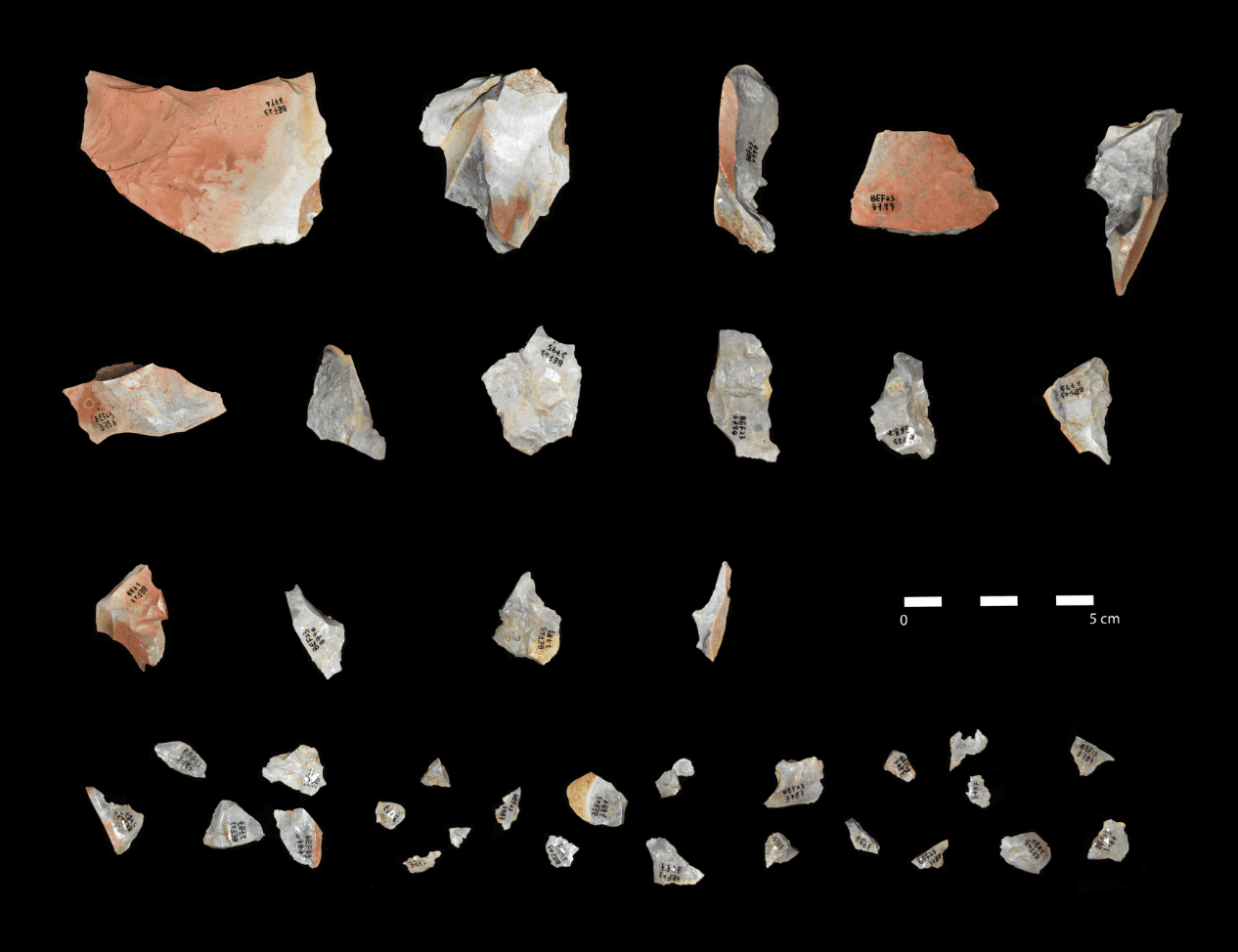
The pieces of the A2 cluster before refitting. The fine knapping of the top left one was an incentive to attempt refitting. (Photo: Claire Lucas)

Flint may explode when heated to high temperatures. Refitting heat shattered materials, even unknapped stones, is a way to appreciate the effects of fire on the whole block and map the fragments distribution to see how they moved across the site. The idea of attempting such refitting had emerged on site as quantities of heat shattered flint were found alongside handaxe manufacturing flakes in the Areas I and VI of Barnham East Farm. In the field, all burning evidence was thoroughly recorded with a question in mind: Did the hominins who produced handaxes here also make fire or could it result from a wildfire? Amongst the methods available to characterize burning events, refitting is always a long shot as it is an uncertain, time-consuming exercise. In the summer 2023, the discovery of a heated flint cluster including a finely knapped fragment in square A2 finally convinced us it was worth trying.

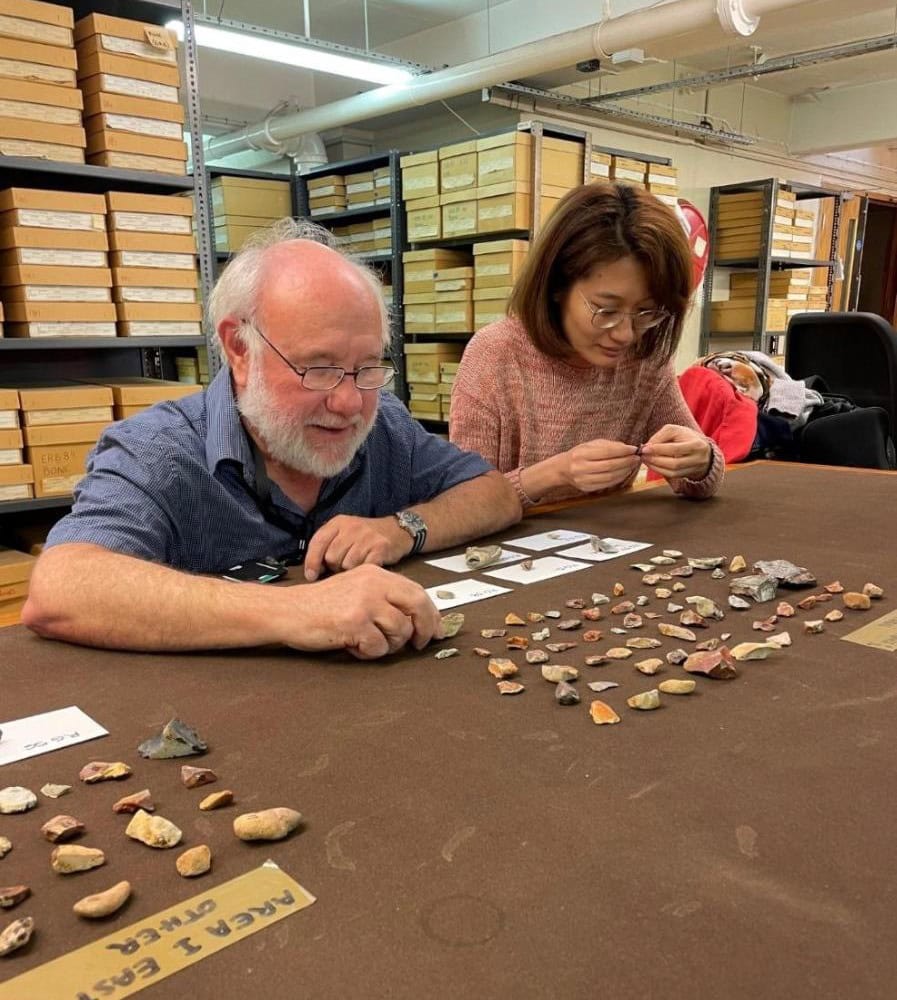
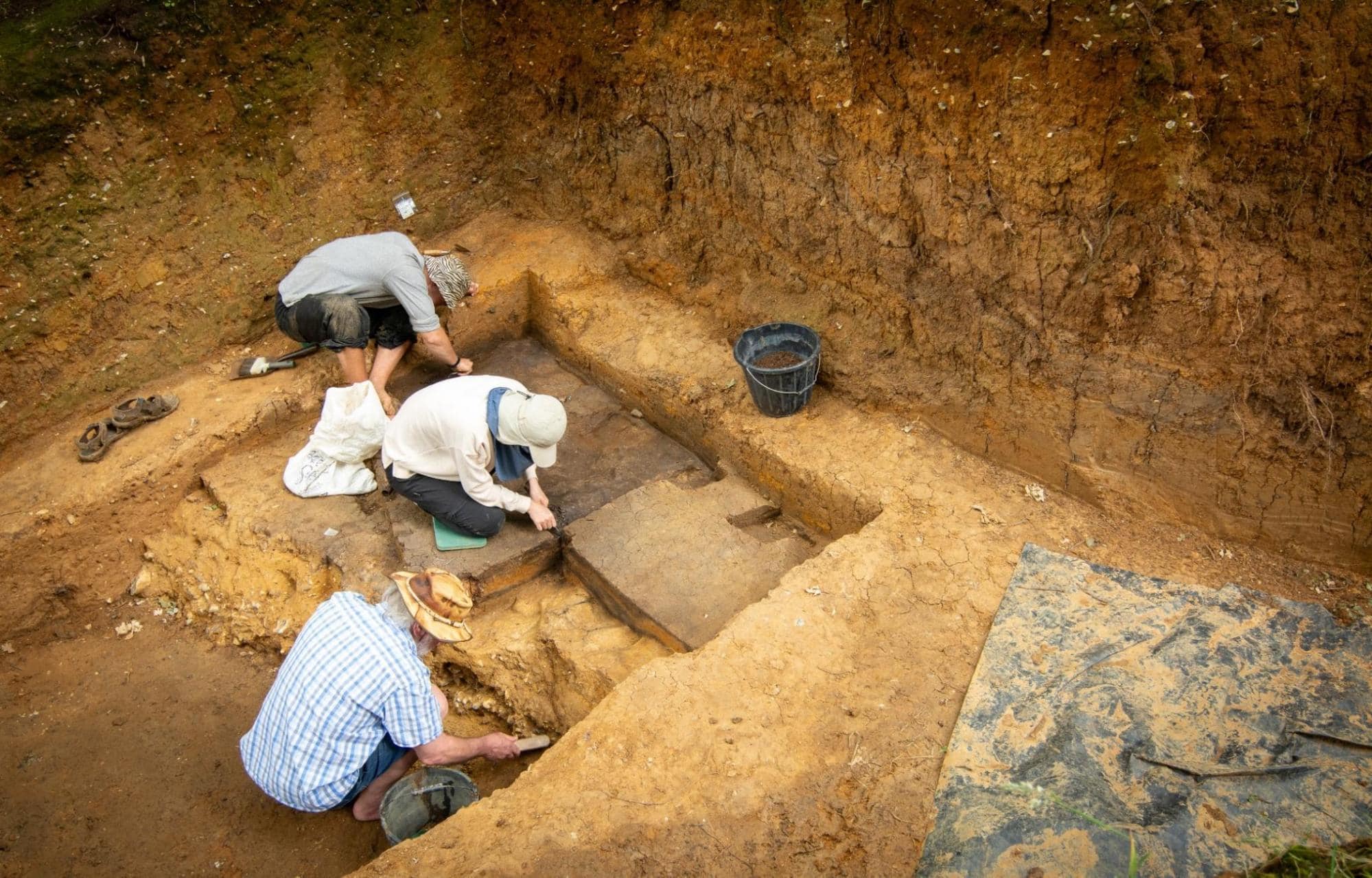
In the autumn of 2023, post excavation tasks were undertaken at a British Museum store and research facility by a team of 3 to 6 volunteers meeting weekly. As a standard start for refitting, all heated stones from Area I were washed and labelled before being laid out on a table. This preparatory work took weeks due to the sheer number of pieces, most of which are tiny fragments less than 2 cm long and required miniature handwriting to apply their excavation number. Once the clean pieces exhibiting neat fractures were laid out, refitting of the 3D puzzle began. 

Volunteers refitting heated flint from Barnham
Volunteers refitting heated flint from Barnham Area I. (Photo: Siddharth Kutty)

To identify items likely to refit, we look at the colours of course to spot the heated pieces sharing similar pale and reddish tints and, most importantly, we observe the break shapes and surface textures. Looking closely, there are surfaces with coarser or finer grain, some are smooth and shiny while others show a rough texture that is typical of some thermal fractures. Thus, scrutinizing all pieces for resemblances, we started gathering those looking alike together.

Refitting sets built up gradually over a couple of months. All it needed at last was some imagination and boldness to assemble them and a bit of double-sided tape and foam to temporarily hold the refit groups whilst still allowing separation when need be. Like any puzzle, flint refitting can be addictive. Second and third calls soon became necessary to ensure all volunteers stopped for lunch. Enthusiasm reached a peak when the refit group with the finely knapped piece from the A2 cluster started looking more and more like a handaxe. We were finally able to assemble parts of both faces confirming the tool was indeed bifacially knapped. The fire-cracked handaxe is still incomplete as we write these lines but, amazingly, we managed to refit 25 pieces, most of which are tiny fragments resulting from a severe exposure to fire.

pieces of the A2 cluster during refitting
The pieces of the A2 cluster during refitting, when both faces of the handaxe were finally assembled. (Photo: Xin Ding)

Alongside many unknapped heated pebbles, another three fire-cracked handaxes and two flakes were refitted by the end of the following autumn. Most of the refits achieved so far reassemble fragments found very close to one another in the field. They support a good spatial preservation of the sediments and materials in some parts of Area I which might have laid relatively undisturbed since the fire occurred.

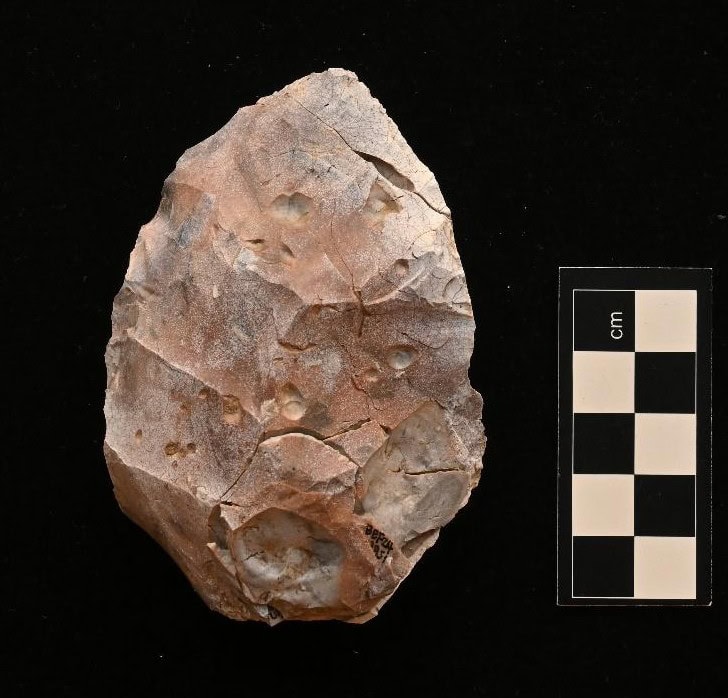
fire-cracked handaxe from Barnham
Another fire-cracked handaxe from Barnham, refitted from 6 pieces and almost complete. (Photo: Claire Lucas)

Meanwhile, in the lab, an array of scientific analyses was undertaken on a variety of fire evidence collected in the vicinity of the fire-cracked handaxes, including heated sediments, charcoals, and pyrite fragments. The results of these analyses provided further evidence of the making of fire by Barnham handaxe makers, and the patiently refitted fire-cracked handaxes became a vivid image of the technologies of these early humans. We are always one click away from a clearer picture of the past…

Further Reading

Davis, R.J, Hatch, M., Hoare, S., Lewis, S.G., Lucas C., Parfitt, S.A., Bello, S.M., Lewis, M., Mansfield, J., Najorka,J., O’Connor, S., Peglar, S., Sorensen, A., Stringer, C.B., Ashton, N.M. (2025). Earliest evidence of making fire. Nature.

Posted on

Summer 2024 excavation at Devereux’s Pit

PAB researcher and excavation director Dr Rob Davis reflects on the 2024 excavation

The 2024 week 1 excavation team standing in Area II.
The 2024 week 1 excavation team standing in Area II. (Photo: Rob Davis)

The 2024 field season at Devereux’s Pit marked the beginning of a new phase of research at this 400,000-year-old Lower Palaeolithic site. Our previous excavations had focused on an area (Area I) near the margins of an ancient waterbody, where humans had exploited flint cobbles and nodules to manufacture stone tools. The Area I sediments are decalcified, meaning bones and other organic materials are not preserved. This limits our understanding of the archaeology. If they were present, animal bones might preserve traces of butchery or other evidence of human-animal interactions. They could be used to reconstruct the ancient environment by looking at the types of habitats preferred by the different species of animals represented, and might also provide a means of relative dating through biostratigraphy. We do know from contemporary descriptions of the site that workers digging the pit for clay in the late 19th Century did find bones, antlers and shells in the sediments. It is also reported that they promptly reburied the bones! If we want to understand the environmental context of the human presence at Devereux’s Pit 400,000 years ago, we need to identify and excavate sediments that preserve faunal remains. 

The search for suitable deposits has been ongoing alongside the archaeological excavation. During the 2021, 2022 and 2023 field seasons, we extracted 41 sediment cores from boreholes located across the site in order to map the distribution and geometry of the sediments. From these we identified calcareous sediments with the potential to preserve bone and shell at various depths and in various locations towards the centre of the waterbody. This included a silty sand encountered 2 m below the surface and approximately 8 m to the west of Area I, which contained a beautifully preserved head of a red deer femur (see 2023 field season post). This remarkable find made this the obvious target for the 2024 season, with the aim to excavate a 4m2 area of this deposit to recover more bones and hopefully begin to build up a picture of the range of species and habitats. 

Excavation underway of the decalcified sands and clays at the top of the sequence. These sediments contain occasional artefacts, including flakes from the manufacture of handaxes.
Excavation underway of the decalcified sands and clays at the top of the sequence. These sediments contain occasional artefacts, including flakes from the manufacture of handaxes. (Photo: Rob Davis)

The excavation of Area II began using a mini-digger to remove the 1 m thick backfill that overlies the Pleistocene sediments and forms the floor of the pit today, from a 4 x 4 m area. This revealed a series of rectilinear 19th Century quarry pits that had been dug through clays, stopping on the surface of a sand deposit. We then set-out a 2 x 2 m area and commenced more careful excavation. We encountered a series of decalcified clays and sands overlying the calcareous silty sands. Artefacts were present in low numbers throughout. The archaeological sequence conformed to that of Area I, with handaxe manufacturing flakes associated with the clays at the top of the sequence, and cores and flakes from the sands below.

Photograph of section through the Area II sediments excavated during the 2024 field season, showing calcareous silty sand at the base, overlain by sequence of interbedded sands and clays.
Photograph of section through the Area II sediments excavated during the 2024 field season, showing calcareous silty sand at the base, overlain by sequence of interbedded sands and clays. (Photo: Rob Davis)

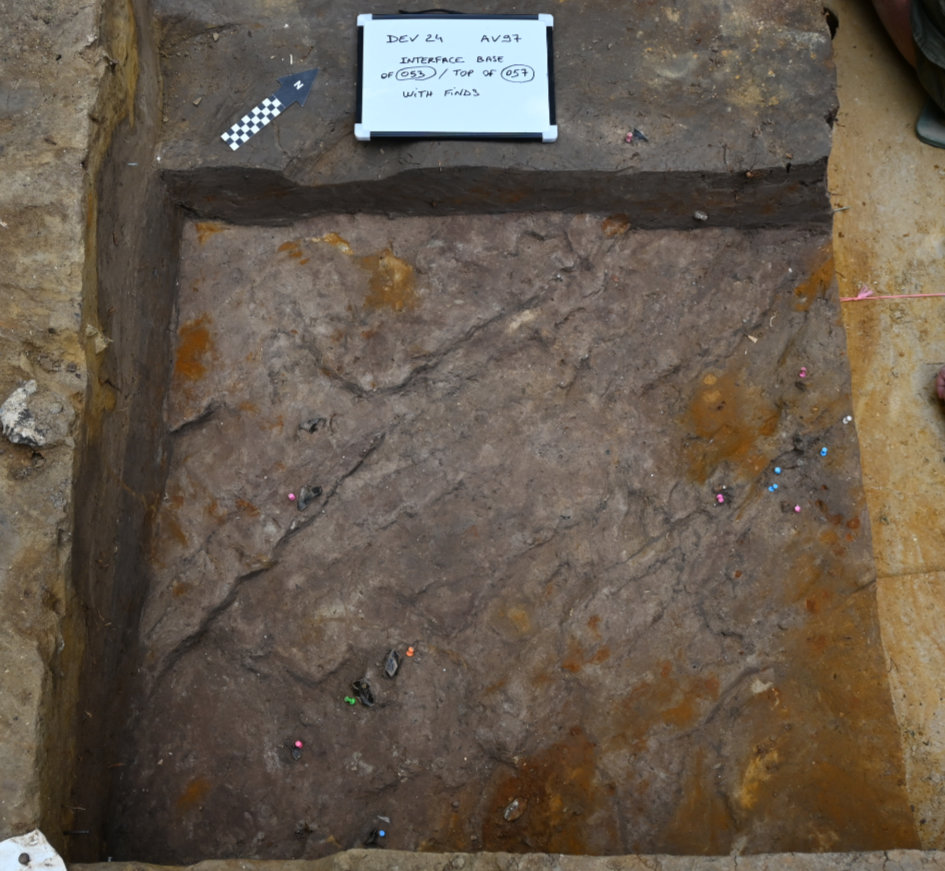
In one half of our trench, we encountered a grey clayey sand with a rippled surface, on which lay several fresh flint flakes and the base of a very large deer antler. This appears to be an ancient land surface at the edge of a small stream. It has been carefully covered for further investigations in the future, including extending the trench to trace the surface to the south and west, with the potential of identifying in situ archaeology. 

A possible ancient land surface, with flint artefacts and the base of a deer antler lying on the surface.
A possible ancient land surface, with flint artefacts and the base of a deer antler lying on the surface. (Photo: Claire Lucas)

We reached the calcareous silty sands during our third and final week of excavation. It quickly became apparent that while bone was preserved, it was fairly sparsely distributed through the sediment. As we approached the level of the red deer femur, recovered from the borehole during the 2023 season, several other large deer bones were encountered alongside an incredibly fresh flint core. It seems that our femur may be part of a deer carcass that became disarticulated and dispersed over a small area. Post-excavation work on the bones is underway, and it remains to be seen whether there are any cut-marks, but the associated flint core at least raises the possibility of a butchery site. Future work in Area II will expand our excavation area to recover more of the deer carcass and see if there are any more artefacts associated with it.

The first phase of work at Devereux’s Pit will be published in a forthcoming paper, which will present new evidence for the Clactonian-Acheulean succession c. 400,000 years ago. A recent summary of the archaeology of this time period in Europe can be found here.  

Posted on

Excavations continue at Devereux’s Pit

PAB researcher and dig director Dr Rob Davis reflects on this season’s fieldwork at Devereux’s Pit

Before and after a day of hard work by the team to get the site ready again for excavation. (Photo: Rob Davis)

There is always excitement at the beginning of a new field season, but following a very wet start to the summer, there was also a certain amount of trepidation as we headed off for another three weeks excavating at the Lower Palaeolithic site of Devereux’s Pit in Suffolk. Will it ever stop raining? What state will the site be in? But then, just as we arrived, the sun emerged and a small team of PAB researchers and volunteers set about recovering the site – bailing out water, cutting back vegetation, peeling off protective sheeting, and cleaning sections – and within 24 hours we were ready to excavate.

Towards the end of the 2022 season, we had noticed a change in the archaeology as we excavated deeper into the sedimentary sequence in Area I. Whereas previously we had encountered flint flakes characteristic of handaxe manufacture, these were absent from the lower deposits, which instead contained large patinated flakes that had been removed from cores using hammerstones. A primary aim for the 2023 excavation was to excavate more of the lower deposits to increase the size of the assemblage and see if the pattern held.

This season’s excavations focused on three aspects of the site. In Area I, excavation of the lower part of the sequence continued to produce archaeology, including more than 400 cores and flakes, with no hint of handaxe manufacture. Some of the flakes have been modified through retouch to their edges to create a variety of tools, particularly notches and denticulates. We also extended our excavations to the west to create a new section through the sediments and fully establish the sedimentary succession across Area I. A further eight boreholes were drilled to supplement boreholes drilled in 2021 and 2022. Together, the new boreholes and section will enable us to tie in the stratigraphy in Area I to our developing deposit model for the site. Recovery of Bithynia opercula from borehole samples has enabled use of the amino acid racemisation (AAR) dating method. The results indicate that the interglacial sediments at the site were deposited during MIS 11 (c. 400,000 years ago). Working out precisely how the sediments that contain the stone tool assemblages in Area I relate to the boreholes with the opercula, and other faunal material, is critical for establishing the age and environment of early human occupation at the site.

The new section at the western end of Area I. (Photo: Rob Davis)

Perhaps the most surprising discovery of the season came from one of the boreholes. The cores were extracted in 1 m long plastic tubes. Amazingly, a very well-preserved piece of fossilised bone was sticking out of the end of one of the core lengths. The bone is the head of a deer femur, and is from sediments 2 m below the surface, and just a few metres away from Area I. The sediments in Area I are decalcified and bone has not survived in this area. This new discovery gives us a great target for further excavation, and the recovery of more fossils with which to develop our understanding of the local environment in which early humans lived 400,000 years ago.

The head of a deer femur recovered from a borehole during the 2023 excavation. (Photo: Simon Lewis)
Posted on

Reflections on the Barnham 2023 Field Season

Another season of fieldwork is completed at East Farm, Barnham

Earlier this summer PAB researchers returned to Barnham for a three-week season of fieldwork. The usual blend of ‘old hands’ and those excavating at Barnham for the first time, including students from Cambridge, Liverpool and Southampton universities, quickly settled into the routine of the excavation, established the areas to be excavated, and set about the various tasks with care and energy. Following a successful field season in 2022, this year’s work focused on an area adjacent to Area I and the intriguing evidence for burning that was revealed there last year, which has added to the abundant quantity of heated material previously found in this part of the site.

Team members working in Area I during the 2023 excavations at Barnham, Suffolk

The main objective of the fieldwork this year was to establish the nature and lateral extent of the indications of burning. To achieve this, the test trench started last year was excavated in detail and the original footprint of Area I was extended to link the old and new parts of Area I. Together these two excavated areas provide further evidence for fire at Barnham. Samples taken last year for magnetics, FTIR and micromorphology have been supplemented with new samples for processing and analysis. Lithic artefacts were also recovered, which were not as numerous as previous years so each one generated renewed excitement and interest!

A cluster of burnt flint (centre left) being excavated in Area I during 2023 fieldwork at Barnham

Elsewhere on the site a small trench in Area III was opened to enlarge the sample from units which have yielded abundant bone material. Extension of the western edge of Area III and re-opening of Pit 4, an old section from the 1990s fieldwork, has provided another opportunity to look at the relationship between the thicker succession in the central part of the basin and the thinner more marginal sediments in greater detail.

During the excavation a number of scientists visited the site including Sally Hoare (Liverpool University), Mareike Stahlschmidt (University of Vienna) and Richard Preece (Cambridge). We also welcomed members of the Essex Rock and Mineral Club for a site visit, and an enthusiastic group from Barnham Primary School, perhaps a future Palaeolithic archaeologist was among them?

For more information about the Barnham Excavations see the project webpages.

Posted on

Climate signals from Hoxne

A new paper by Prof David Horne and colleagues sheds further light on the ‘Arctic Bed’ at Hoxne

The name ‘Hoxne’ has a special place in the lexicon of Palaeolithic archaeology. The brickyard and adjacent pits located near the village of Hoxne in northeast Suffolk have long been famous for John Frere’s discovery in 1797 of several “objects of curiosity”, which later become known as handaxes, and the recognition of their antiquity and significance. More recently John Wymer’s systematic excavations at the site in the 1970s provided a detailed account of the geology, environment and archaeology at the site. It is also an important site for Quaternary geology and biology more generally; Richard West’s classic work on the palaeobotany, published in 1956, provided a detailed assessment of the interglacial vegetation history at Hoxne, and was the basis of the formal definition in 1973 of the Hoxnian Stage of the British Pleistocene. This interglacial is now generally correlated with Marine Isotope Stage (MIS) 11 of the ocean record which dates to around 425,000 to 360,000 years ago.

Schematic section through the Quaternary deposits at Hoxne. The Hoxnian interglacial is represented by strata E-D and the cold interval by Stratum C.

A perhaps less well remembered but no less noteworthy contribution to research at Hoxne is that of Clement Reid (1853-1916). Reid, a geologist and palaeobotanist, and officer of the Geological Survey, is known for his detailed mapping and description of the Quaternary deposits in Britain and elsewhere, and, with his wife Eleanor, was one of the pioneers of the use of plant macrofossils to reconstruct past vegetation changes. Reid directed excavations at Hoxne in 1895 on behalf of the British Association. This work laid the foundations for understanding the site, and established the stratigraphic succession of a series of lacustrine clays (bed E), peat (bed D) and overlying lacustrine and fluvial sediments (beds C-A). Reid identified macrofossils of dwarf species of birch and willow in Bed C, hence the term the ‘Arctic bed’ for this part of the succession, which he regarded as being deposited during a period of cold climate conditions following the main part of the interglacial and succeeded by a further phase of temperate climate conditions when beds A and B were deposited.

A 50cm monolith through part of Stratum C at Hoxne, sampled during AHOB excavations in 2003

One hundred and twenty-five years later, the Hoxne succession has again been investigated for its fossil content and palaeoclimatic significance. A new paper by Dave Horne and colleagues published in Quaternary Research provides quantitative palaeotemperature estimates from three invertebrate fossil groups; beetles, chironomids and ostracods, which are found within the Hoxne deposits, including Stratum (=Reid’s Bed) C. Using the results from the Beetle Mutual Climate Range (BMCR), the Chironomid Transfer Function (CTF) and the Mutual Ostracod Temperature Range (MOTR) methods, a multi-proxy consensus approach was used to reconstruct the temperature variations during the deposition of the Hoxne succession. The results indicate that summer temperatures during the Hoxnian interglacial were similar or up to 4oC higher and winter temperatures were similar or up to 3oC lower than today. In contrast the temperature reconstruction for Stratum C indicates summer temperatures 2.5oC cooler and winter temperatures between 5-10oC cooler than today. A return to more temperate conditions after the deposition of Stratum C, completes the warm-cold-warm oscillation represented at Hoxne. This climate signal can be correlated with sub-stage variations within MIS 11 of the deep ocean record and also provides a palaeoclimatic backdrop for human occupation of the site some 385,000 years ago.

The paper is not available under OA. However, it will be available on QMRO in due course.